
Ask any production coordinator to name the department that files the most lost gear reports, and they'll tell you the same thing: sound.
It's not because sound mixers are careless. It's because the sound department deals with more small, critical items than anyone else on set—and most of those items look identical.
Lavs. Cables. Adapters. Batteries. Transmitters. Wind protection. Tape. Tools. The list goes on. And when you're working fast, moving between locations, and dealing with last-minute talent changes, things disappear.
I've talked to sound mixers who've lost thousands of dollars in gear over a single season. Expensive wireless lavs left in talent dressing rooms. Cables mixed up with other departments' gear. Small adapters that fell out of poorly organized bags during load-out.
The problem isn't the people. It's the system—or lack of one.
The Unique Organizational Challenge of Sound Departments
Sound departments face organizational challenges that other departments don't deal with:
Massive quantity of small items. A typical sound cart for a narrative shoot might have 30+ wireless transmitters, 50+ lav mics, hundreds of cables and adapters, dozens of batteries, and countless small accessories. All of these need to be tracked, organized, and accounted for.
Everything looks the same. Black cables. Black transmitters. Black adapters. Black tape. When you're working under pressure and everything's the same color, it's easy to grab the wrong item or lose track of what's what.
Constant movement. Sound gear moves more than any other department. You're pulling lavs for every scene, swapping batteries constantly, running cables, and reorganizing your cart multiple times per day. More movement means more opportunities for things to go missing.
Talent interaction. Sound is the only department that regularly sends expensive equipment home with talent (wireless transmitters and lavs). Getting that gear back at the end of the day is a constant challenge.
Multi-location shoots. When you're moving between three locations in one day, it's easy to leave a bag of adapters at location one or forget a transmitter case in a talent trailer at location two.
Time pressure. Sound is always racing the clock. You're the last department to wire talent before rolling, and the first department everyone yells at when there's a technical issue. You don't have time to dig through disorganized bags.
What Disorganization Actually Costs Sound Departments
Let's talk real numbers, because the cost of disorganization isn't abstract—it's measurable and expensive.
Lost gear replacement costs: The average sound mixer loses $2,000-4,000 worth of gear annually. A single Sanken COS-11 lav costs $400. Lose three in a year, and you're out $1,200. Lose a Lectrosonics transmitter at $1,800, and your profit margin for that job just disappeared.
Time wasted searching: Sound mixers estimate they spend 30-45 minutes per shoot day looking for specific cables, adapters, or accessories. On a 12-hour day, that's 5-6% of your time spent searching instead of working.
Reputation damage: Show up to set missing a critical cable or adapter, and production remembers. Get a reputation as the "disorganized sound mixer," and you stop getting called back.
Stress and mental load: Constantly worrying about whether you have the right gear, whether you left something at the last location, or whether talent returned their lav creates massive mental stress that affects your work quality.
Rental house charges: Many sound mixers rent additional gear as backup because they don't trust their organizational system. That's extra cost on every job.
Why Generic Organization Solutions Don't Work for Sound
Most sound mixers try to solve the organization problem with generic solutions:
Plastic bins from hardware stores. They're cheap and stackable, but they're not designed for the specific sizes and shapes of sound gear. You end up with wasted space and items sliding around.
Generic black pouches. Everything's black, nothing's labeled, and you're opening every pouch to find what you need. It's only slightly better than having everything loose.
Tackle boxes and tool organizers. These work for stationary storage, but they're not designed for the constant movement and access patterns of on-set sound work.
DIY foam inserts. Custom foam is great for specific items, but it's not flexible. Your kit changes from job to job, and foam can't adapt.
The fundamental problem with all these solutions: they weren't designed by sound professionals for sound work. They're generic tools being forced into a specialized application.
The Film Swag Solution: Organization Designed for Sound Professionals
Film Swag Bags were designed by people who've actually worked on film sets and understand the specific organizational challenges sound departments face.
Here's what makes them different:
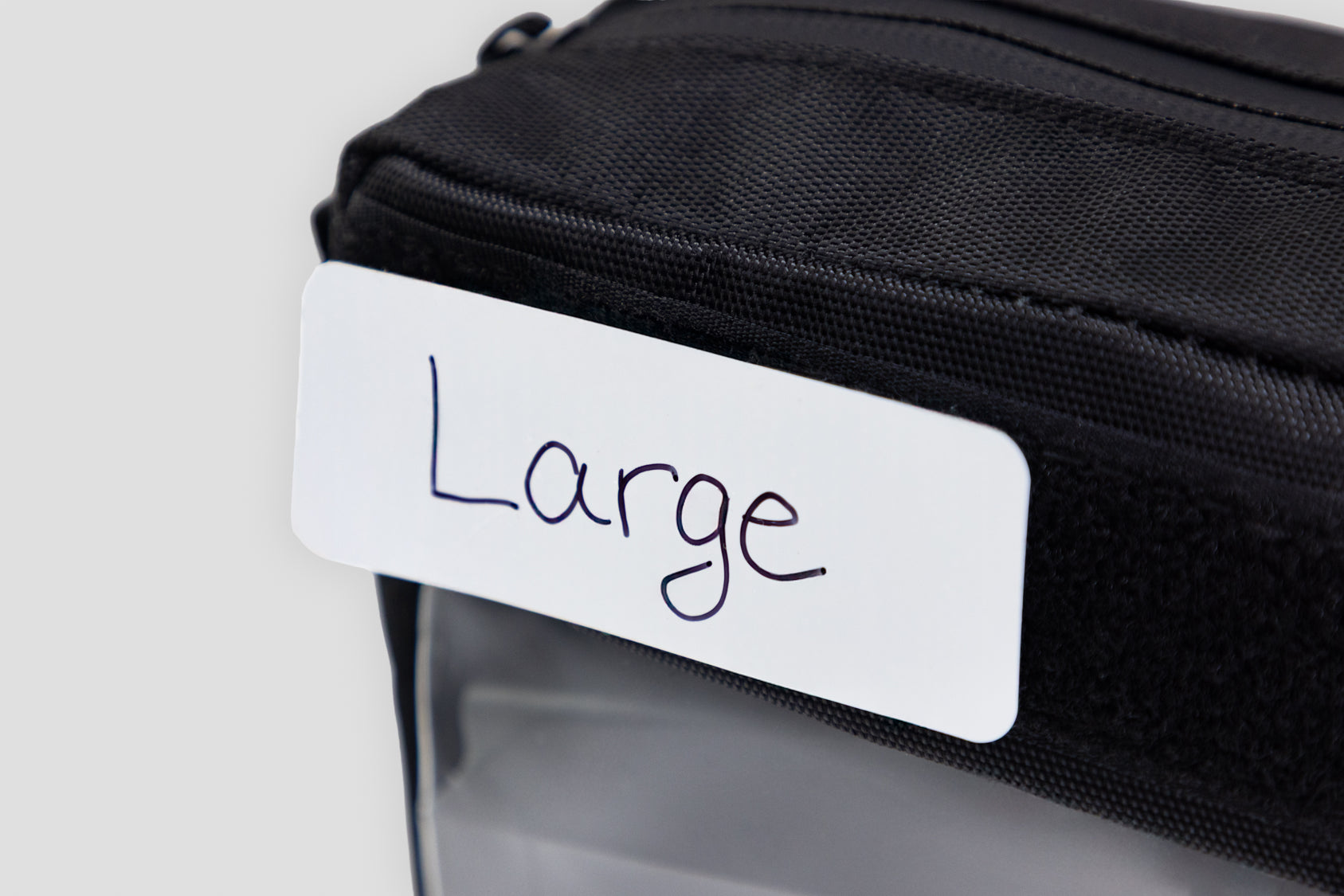
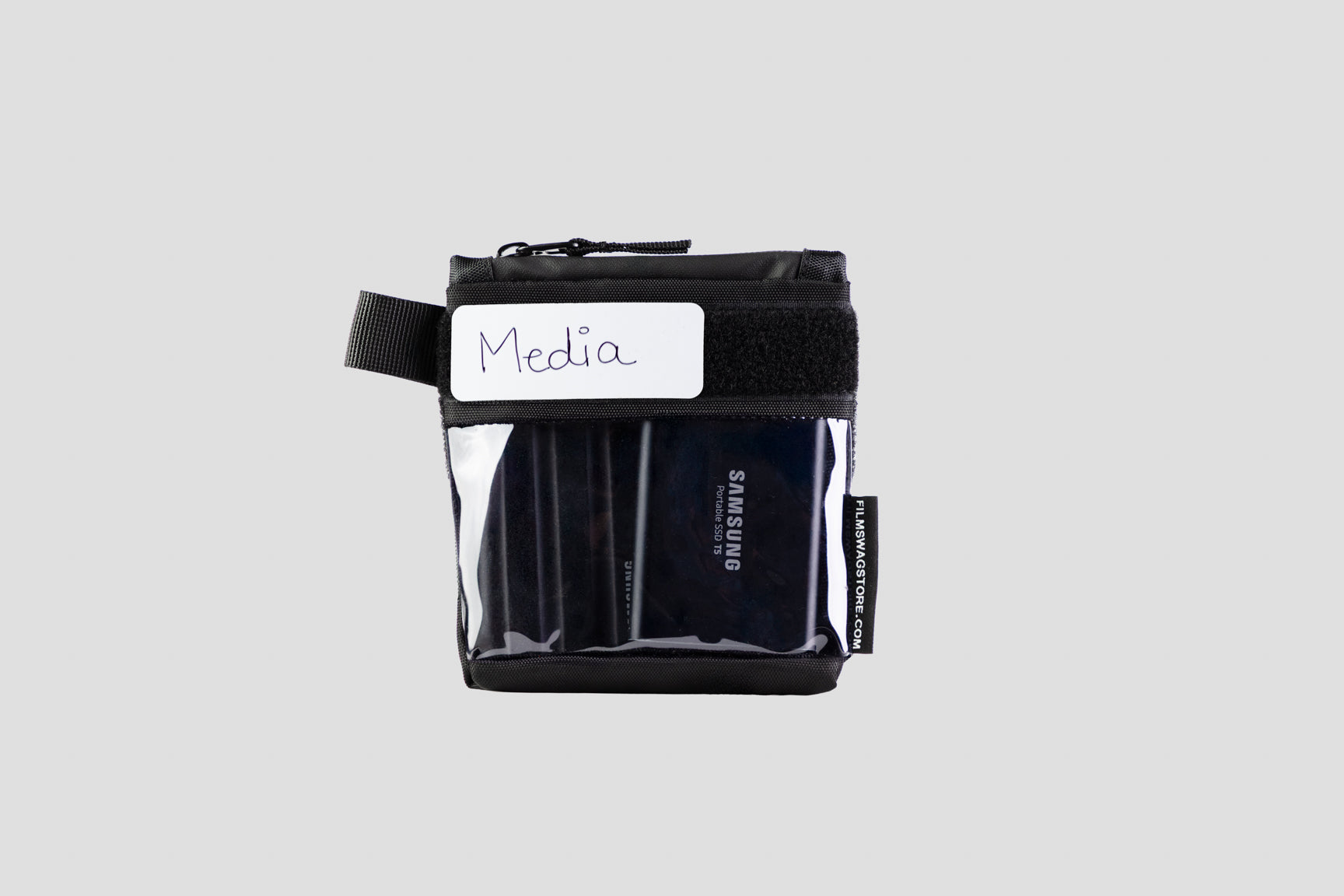
Customizable velcro labeling system. Every bag has a velcro patch where you can write exactly what's inside with dry-erase markers. "LAVS 1-6" or "XLR CABLES 25FT" or "TRANSMITTERS A-BLOCK." Change labels between jobs as your kit changes. Know instantly what's in every bag without opening it.
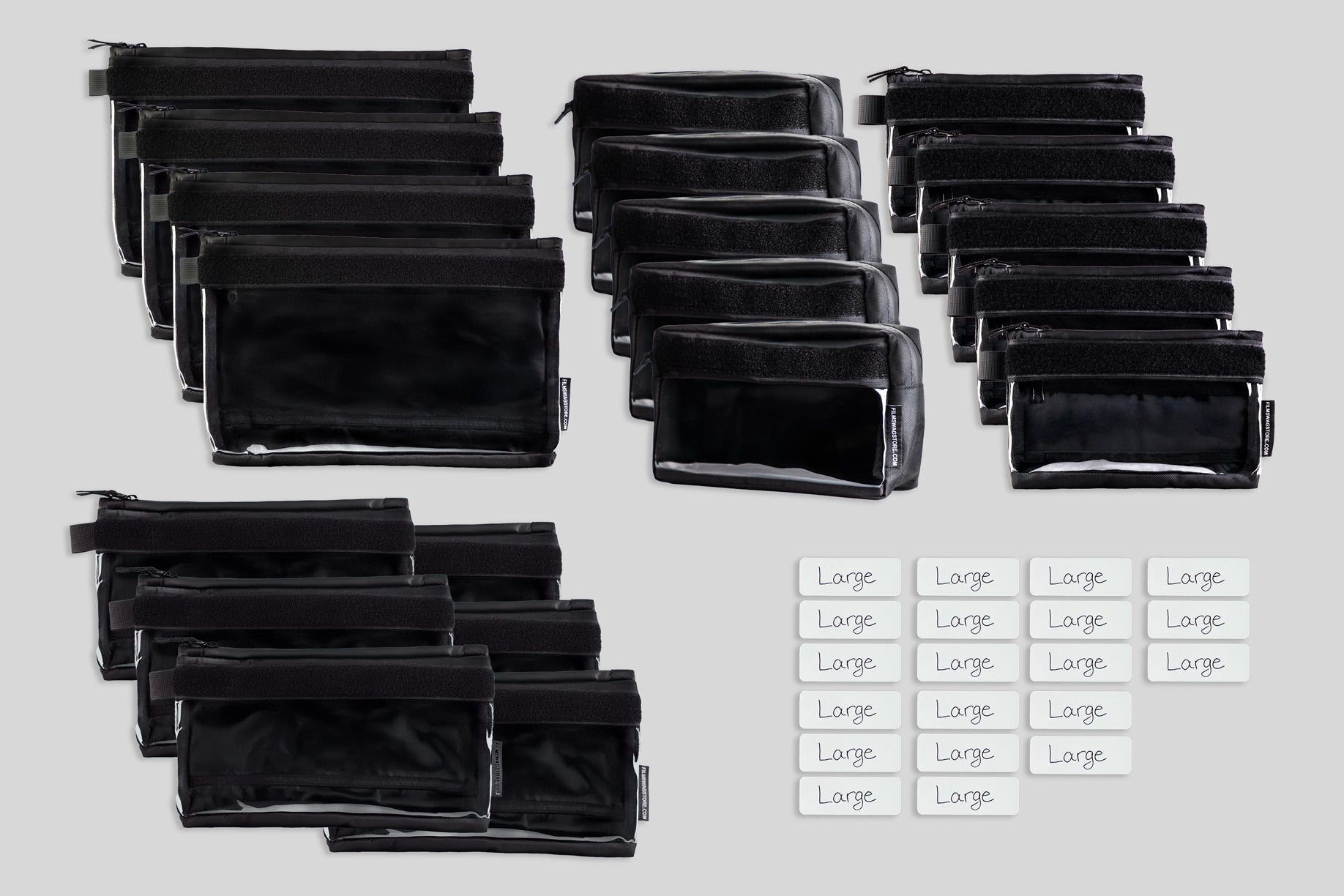
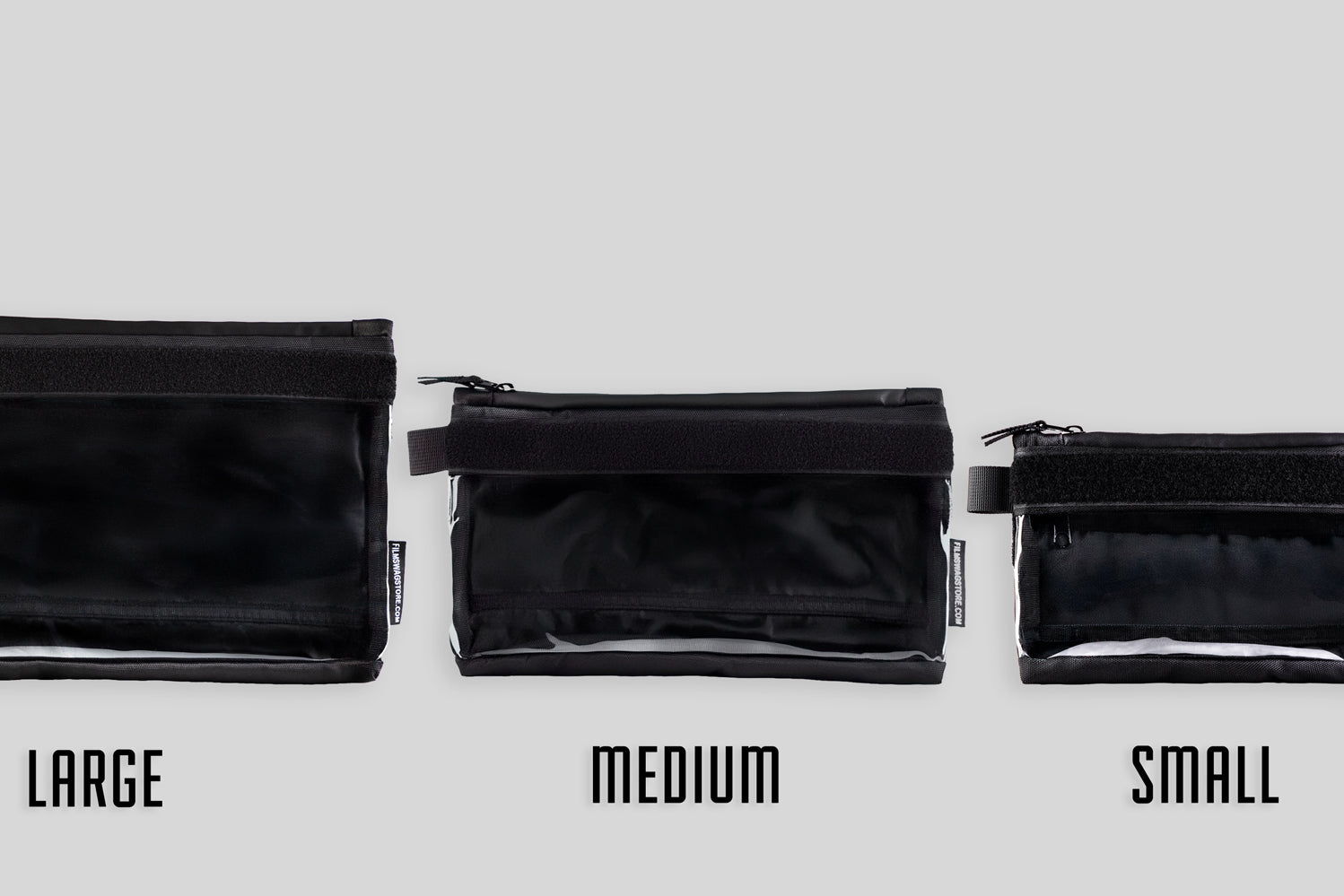
Multiple sizes for different gear types. Small 5x5" bags for individual lavs and transmitters. Medium 7x9" bags for cable bundles and adapter kits. Large 10x12" bags for complete wireless systems. Extra large 14x14" bags for boom pole accessories and large cable runs.
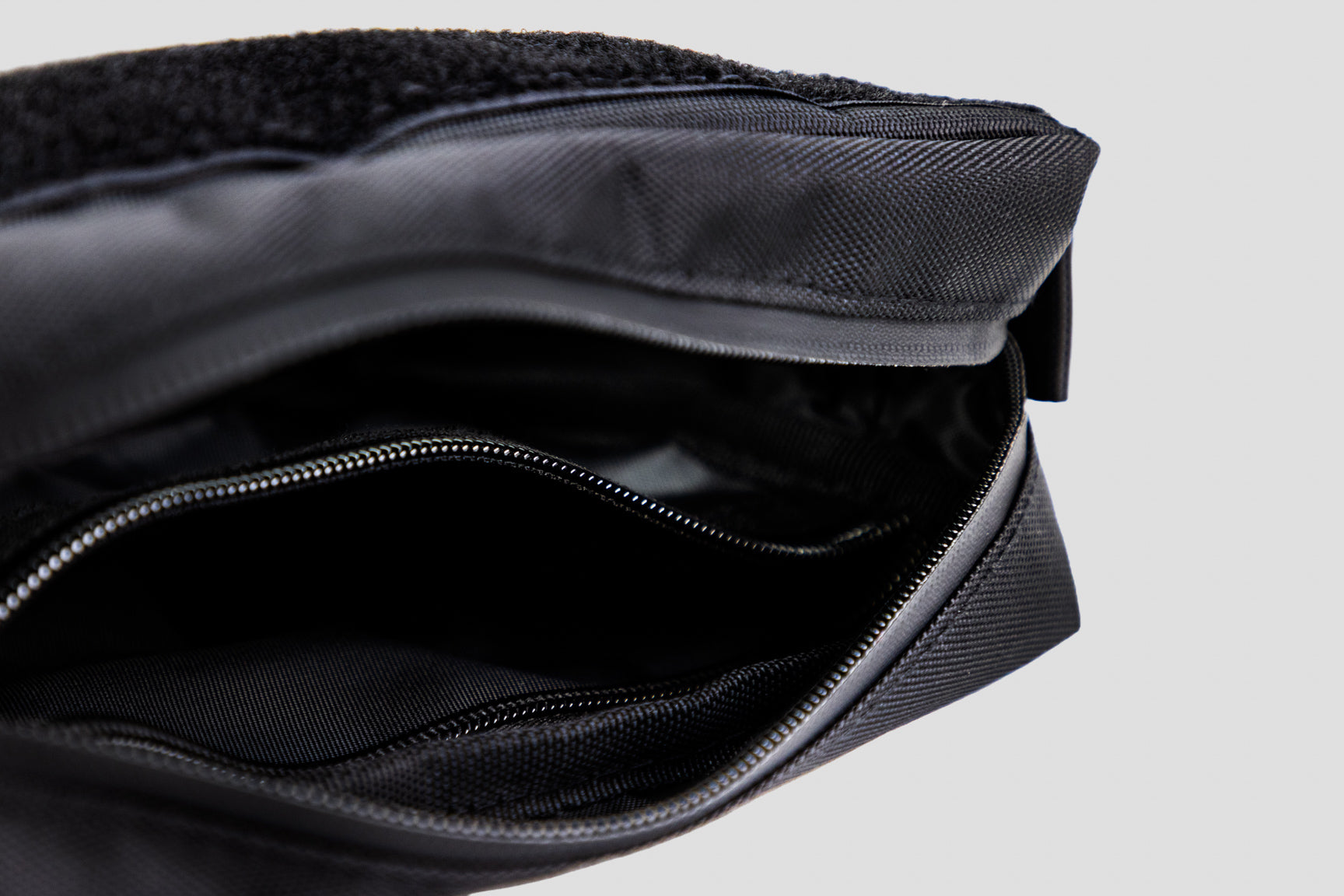
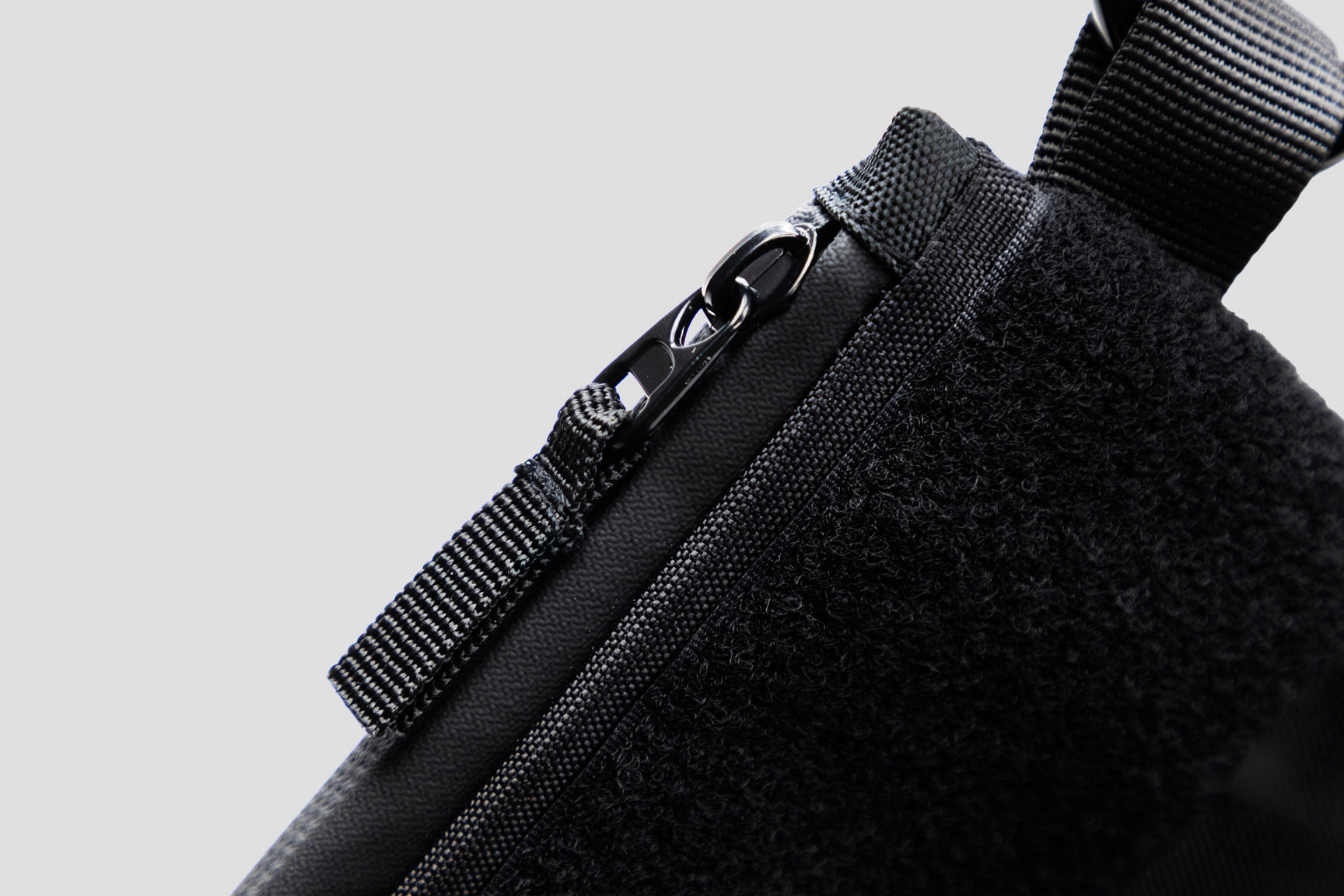
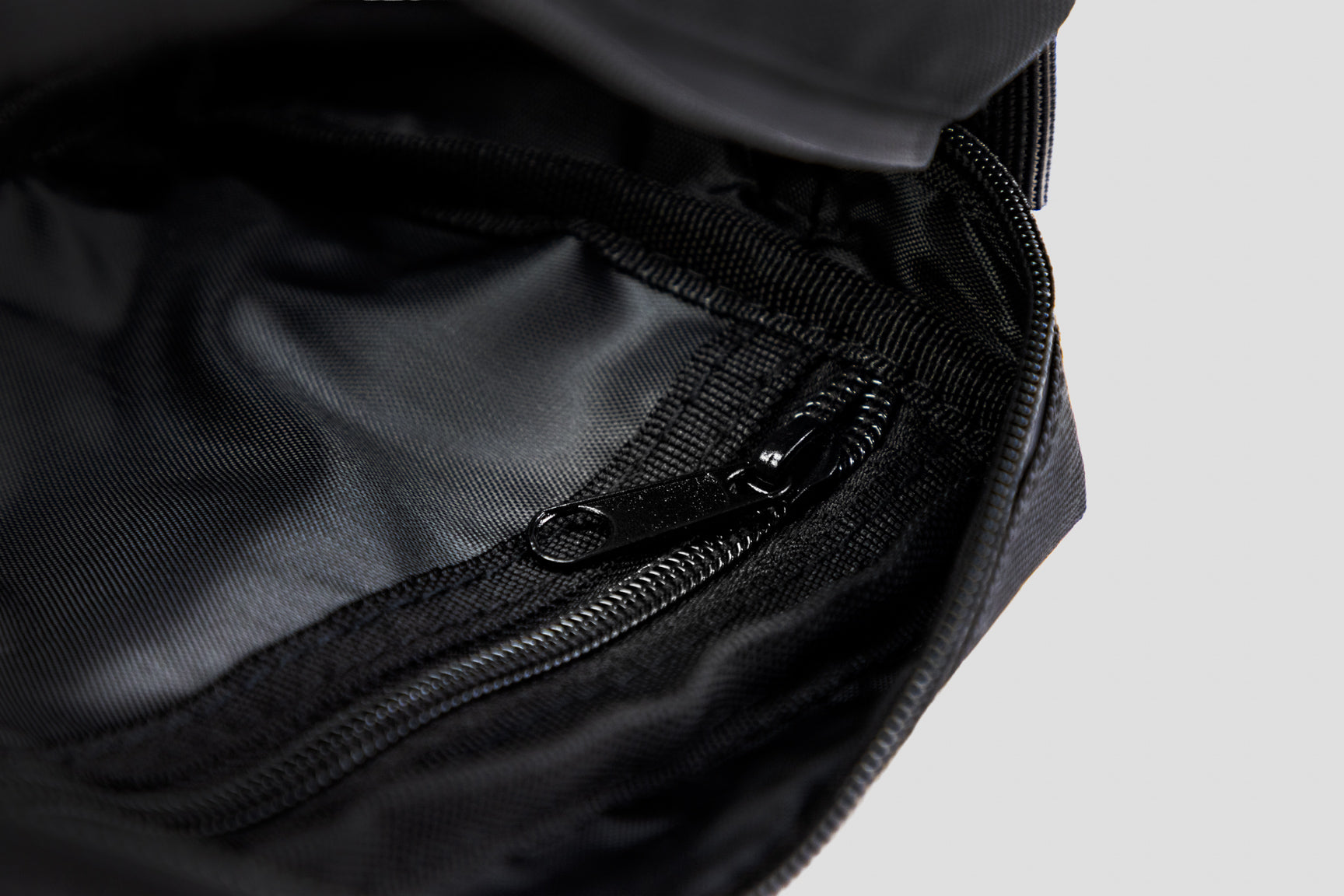
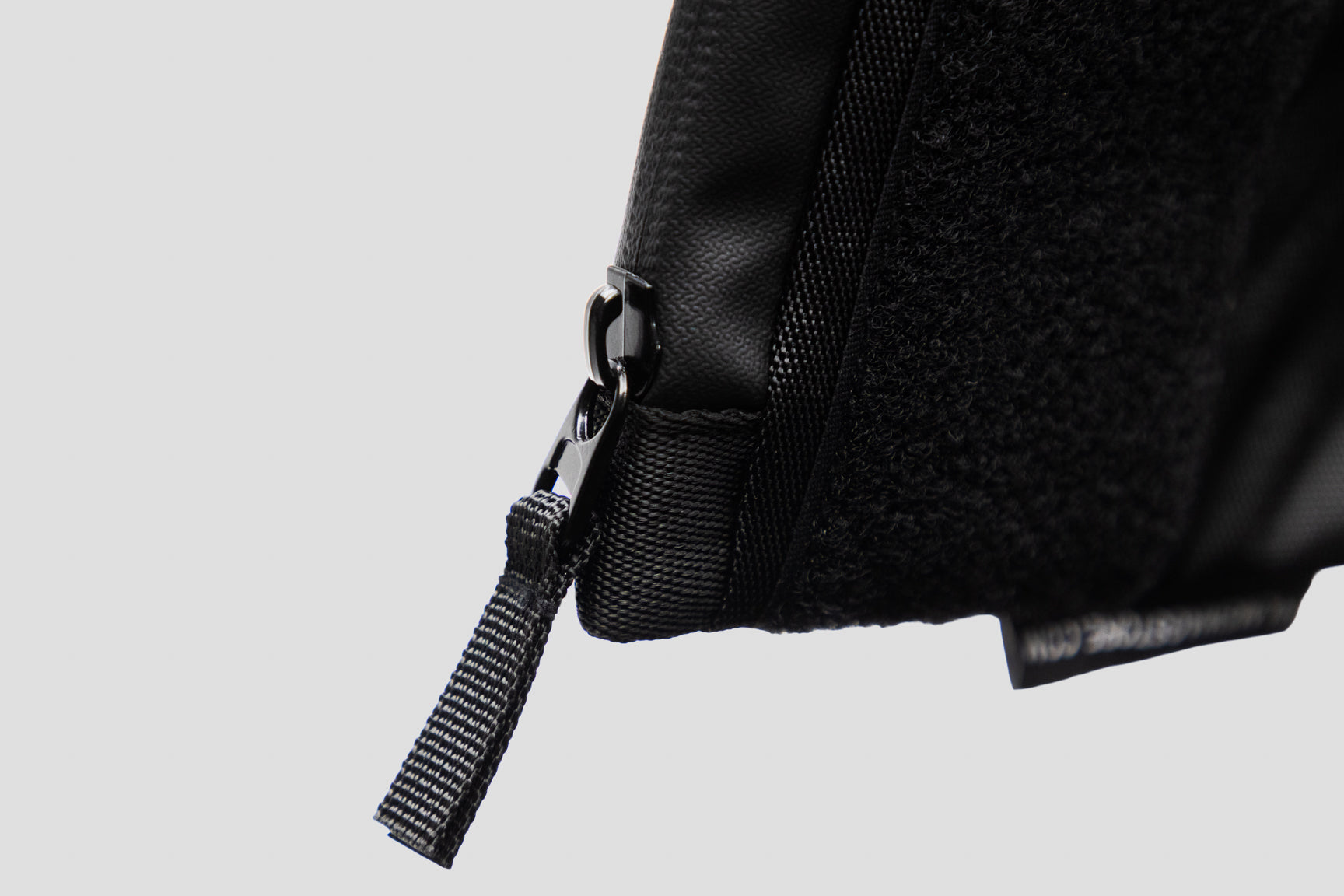
Set-tested durability. Sound gear gets handled constantly. Film Swag Bags use ultra-high-quality zippers and materials that withstand daily use in harsh conditions. They're built to last years, not months.
Professional appearance. These bags look professional on your cart and in front of clients. They signal that you're organized and take your work seriously.
System flexibility. Your kit changes from commercial to narrative to documentary work. Film Swag Bags adapt to whatever you need because the labeling system is completely customizable.
How to Organize Your Sound Cart: A Complete System
Here's exactly how to organize a professional sound cart using Film Swag Bags:
Step 1: Categorize your gear
Divide everything into clear categories:
-
Wireless transmitters (organized by frequency block)
-
Lav microphones (organized by type or number)
-
Cables (organized by type and length)
-
Adapters and connectors
-
Batteries and power accessories
-
Wind protection and mounting accessories
-
Tools and repair items
-
Tape and consumables
-
Boom pole accessories
Step 2: Assign bag sizes to categories
Match your categories to appropriate bag sizes:
-
Individual lavs and transmitters: Small bags (5x5")
-
Cable bundles and adapter kits: Medium bags (7x9")
-
Complete wireless systems: Large bags (10x12")
-
Boom accessories and large cable runs: Extra large bags (14x14")
Step 3: Label everything clearly
Use the velcro label system to mark each bag with specific contents:
-
"LAVS COS-11 1-6"
-
"TX A-BLOCK 1-8"
-
"XLR 25FT (6)"
-
"ADAPTERS TA5-XLR"
-
"BATTS AA (50)"
-
"WIND RYCOTE OUTDOOR"
Be specific. The more detailed your labels, the faster you can find what you need.
Step 4: Create zones on your cart
Organize your cart into functional zones:
-
Hot zone: Items you need constantly (current lavs, active transmitters, frequently used cables)
-
Ready zone: Backup gear ready to deploy (additional lavs, spare transmitters, common adapters)
-
Storage zone: Less frequently used items (specialty cables, rarely needed adapters, backup supplies)
Step 5: Implement a check-in/check-out system
For gear that leaves your cart (especially lavs and transmitters going with talent):
-
Create a checkout sheet listing every transmitter and lav by number
-
Check off items as they go out to talent
-
Check off items as they return at wrap
-
Do a final count before leaving location
Step 6: Maintain the system daily
At wrap each day:
-
Return all gear to its labeled bag
-
Verify all talent gear has been returned
-
Restock consumables (batteries, tape, etc.)
-
Do a quick visual check that all bags are present
Five minutes of maintenance at wrap saves hours of searching the next day.
Real Results from Professional Sound Mixers
"I lost three lavs in two months before switching to Film Swag Bags. The labeling system means I know exactly what's supposed to be in each bag, and I can see immediately if something's missing. Haven't lost a single piece of gear in six months." — Alex M., Production Sound Mixer, Atlanta
"My sound cart used to be chaos—black bags everywhere with no system. Film Swag Bags with clear labels transformed how I work. I can find any cable or adapter in under 10 seconds now. It's made me faster and more professional." — Sarah K., Sound Mixer, Los Angeles
"I recommended Film Swag Bags to our entire sound department on a series. Now when we're doing handoffs between A and B units, everyone's using the same labeling system. It's eliminated so much confusion and lost gear." — Michael R., Sound Supervisor, New York
Your Sound Department Starter System
Ready to get organized? Here's what I recommend based on your kit size:
Small Kit / Documentary System ($200-300)
-
4x Small bags (5x5") for lavs and transmitters
-
4x Medium bags (7x9") for cables and adapters
-
2x Large bags (10x12") for boom accessories and backup gear
-
2x Extra large bags (14x14") for cable runs and storage
This covers a basic documentary or small commercial kit.
Standard Narrative / Commercial System ($400-500)
-
8x Small bags (5x5") for individual lavs and transmitters
-
6x Medium bags (7x9") for cable bundles and adapter kits
-
4x Large bags (10x12") for wireless systems and boom gear
-
3x Extra large bags (14x14") for large cables and storage
This handles most narrative and commercial work with multiple talent.
Large Production / Sound Cart System ($600-800)
-
12x Small bags (5x5") for extensive lav and transmitter inventory
-
8x Medium bags (7x9") for comprehensive cable and adapter organization
-
6x Large bags (10x12") for multiple wireless systems and boom setups
-
4x Extra large bags (14x14") for large cable runs and backup systems
This is the complete professional system for sound carts on large productions.
Film Swag Bags vs. Generic Solutions: The Real Comparison
Let's be direct about what you're getting:
Film Swag Bags:
-
Customizable velcro labeling system—know what's inside without opening
-
Multiple sizes designed for sound gear
-
Ultra-high-quality zippers and materials
-
Set-tested durability for daily professional use
-
Professional appearance on your cart
-
Designed by film professionals who understand sound work
-
30-day returns and free shipping over $150
Generic Black Pouches:
-
No labeling—you're opening every bag to find what you need
-
Limited size options
-
Cheap zippers that fail
-
Materials wear out after months
-
Look unprofessional
-
Designed by people who've never worked on set
-
Inconsistent quality
The price difference per bag is minimal—usually $5-10—but the time saved and gear protected makes Film Swag Bags pay for themselves in weeks.
The Bottom Line: Organization Protects Your Investment
Sound gear is expensive. A professional sound kit can easily represent $30,000-50,000 in equipment. Losing even a few pieces per year due to poor organization is unacceptable.
Film Swag Bags give you the system you need to protect that investment. They're designed by people who understand sound work, built to withstand professional use, and priced for working sound mixers.
You can't afford to keep losing gear. You can't afford to waste time searching through disorganized bags. And you can't afford the reputation hit that comes with being known as the disorganized sound mixer.
Get organized. Protect your gear. Build your professional reputation.
Ready to organize your sound cart? Visit FilmSwagStore.com to see the complete line of organizer bags designed for sound professionals.
Free shipping on orders over $150. 30-day returns. Built by film pros, for film pros.
About the Author: This article was written by the team at Film Swag Store, founded by working film professionals with real on-set experience. We create organizational solutions because we've lived the problems they solve.