
Film school teaches you lighting, camera operation, sound recording, and editing. But there's one critical professional skill most programs never cover: gear organization.
I learned this the hard way during my first paid gig after graduation. I showed up with my kit in a backpack and a couple of random pouches from Amazon. The producer took one look at my setup and asked, "Are you sure you're ready for this?"
That moment stung. I had the skills. I had the gear. But I looked like an amateur because I wasn't organized like a professional.
The truth is, how you organize your gear signals your professionalism before you even turn on a camera or plug in a microphone. And the good news? You don't need a massive budget to organize like a pro.
Why Organization Matters More for Students Than Anyone Else
When you're starting out, you're competing against people with more experience, bigger networks, and established reputations. Your gear organization is one of the few things you can control that immediately signals professionalism.
Here's why it matters:
First impressions are everything. When you show up to your first PA job, your first production assistant gig, or your first freelance shoot, people are evaluating whether you're professional. Organized gear says "I take this seriously."
You're building your reputation. Film is a small industry. Get known as "that disorganized student" and you'll struggle to get called back. Get known as "that organized, prepared student" and people will recommend you.
You can't afford to lose gear. As a student, every piece of equipment represents a significant investment. Lose a $50 cable or a $200 lens accessory, and it's a major financial hit.
Time is money. Even on student projects, wasting time searching for gear is unprofessional. When you're trying to prove yourself, every minute counts.
You're forming habits. The organizational habits you build now will follow you throughout your career. Start professional, stay professional.
The Student Budget Reality
Let's be honest about the budget situation. You're probably:
-
Working part-time while in school
-
Carrying student loan debt
-
Buying or renting expensive gear
-
Paying for software subscriptions
-
Covering basic living expenses
You don't have $500 to drop on an organizational system. But you also can't afford to keep showing up looking unprepared.
The good news: professional organization doesn't require a professional budget. You just need to be strategic about what you buy and how you use it.
The Minimum Viable Professional Kit
Here's the truth: you don't need to organize everything perfectly on day one. You need to organize the gear you use most often in a way that looks professional and saves you time.
Start with these priorities:
Priority 1: Small, frequently used items. These are the things you're constantly reaching for: memory cards, batteries, lens cleaning supplies, basic cables, adapters. Organize these first.
Priority 2: Items you can't afford to lose. Expensive small items like lens filters, specialty adapters, or borrowed gear need dedicated storage.
Priority 3: Items that signal professionalism. The gear that's visible when you show up to set—your immediate working kit—should look organized and intentional.
Priority 4: Everything else. Bulk storage, backup gear, and rarely used items can use cheaper solutions.
The Film Swag Student System: Professional Organization on a Student Budget
Film Swag Bags are designed by film professionals, but they're priced for working filmmakers—including students. Here's how to build a professional organizational system without breaking your budget.
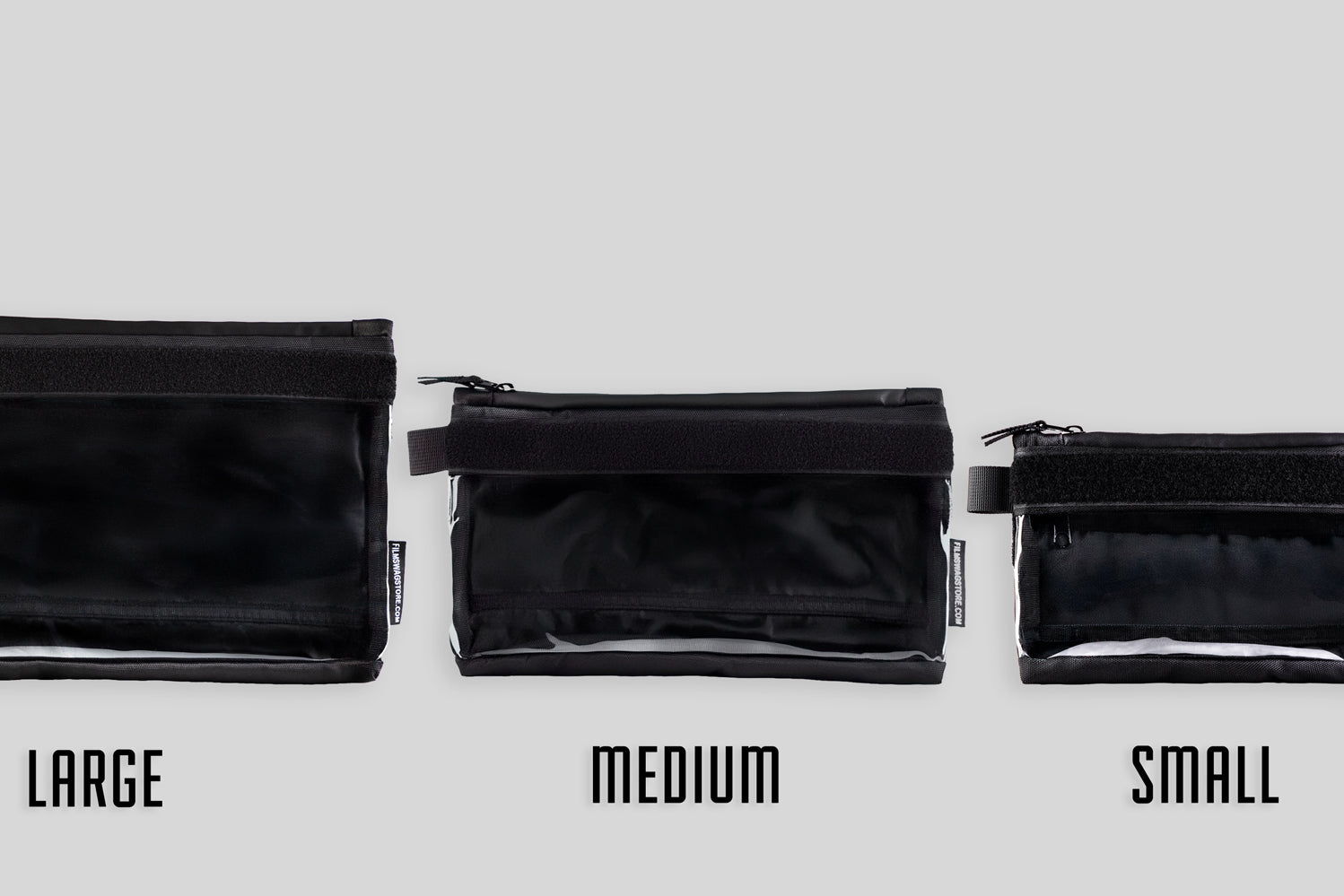
The Essential Student Starter Kit ($100-150):
-
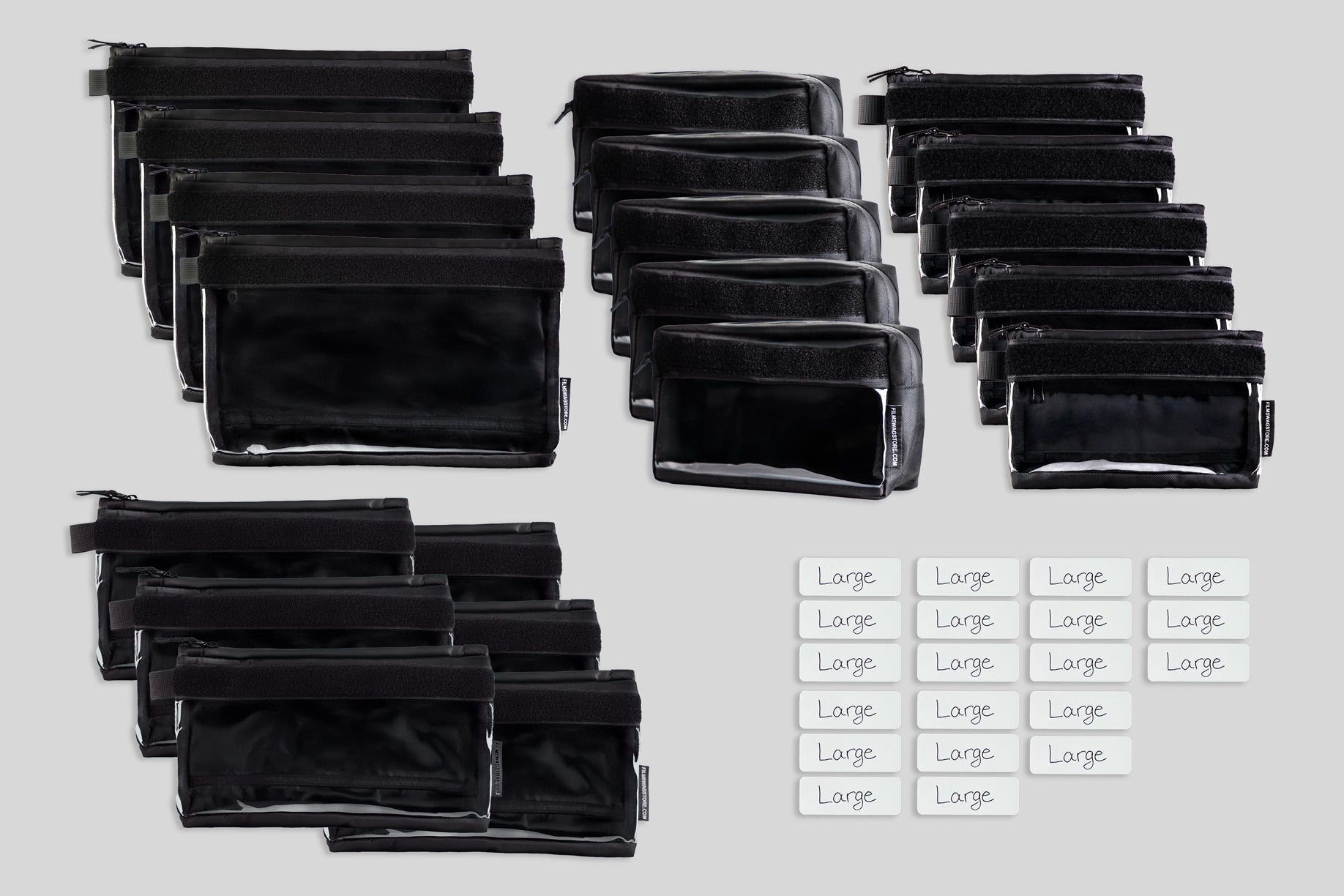
2x Small bags (5x5") - For memory cards, batteries, and lens cleaning supplies
-
2x Medium bags (7x9") - For cables, adapters, and small accessories
-
1x Large bag (10x12") - For your main working kit or department-specific gear
This five-bag system covers the essentials and costs about the same as a single textbook. But unlike that textbook, you'll use it on every single shoot for years.
What this system does:
-
Organizes your most frequently used gear
-
Creates a professional appearance on set
-
Prevents loss of expensive small items
-
Saves time on every shoot
-
Establishes professional habits
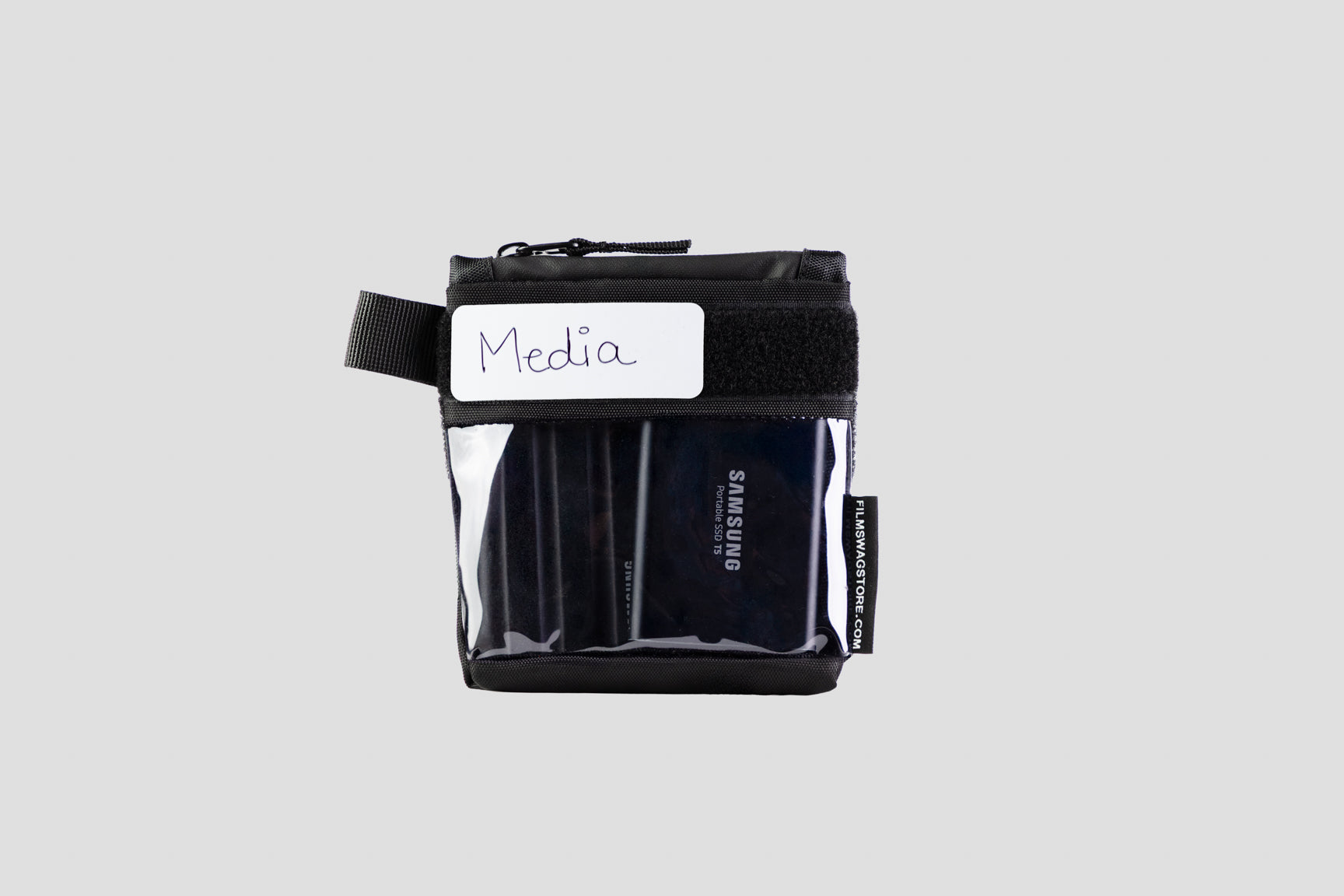
The velcro labeling system is key here. You can write exactly what's in each bag ("SD CARDS + BATTS", "CABLES XLR/HDMI", "LENS KIT") and change labels as your kit evolves. No permanent commitment, total flexibility.
How to Organize Your Student Kit: Step-by-Step
Let's get specific about how to organize your gear as a film student:
Step 1: Inventory what you actually use
Don't organize gear you never touch. Make a list of items you use on at least 50% of your shoots:
-
Memory cards and card readers
-
Batteries and chargers
-
Essential cables (HDMI, XLR, audio cables)
-
Lens cleaning supplies
-
Basic adapters
-
Gaffer tape, markers, and basic tools
These are your priority items.
Step 2: Group by function and frequency
Create categories based on how often you need items:
Always-access items (every shoot, multiple times):
-
Memory cards
-
Batteries
-
Lens cleaning supplies
Frequently-needed items (most shoots, occasionally):
-
Common cables
-
Standard adapters
-
Basic tools
Backup/specialty items (some shoots, rarely):
-
Specialty cables
-
Unusual adapters
-
Backup supplies
Step 3: Assign bags strategically
Match your categories to bag sizes:
Small bag 1: "CARDS + BATTS" - Memory cards, card readers, camera batteries Small bag 2: "LENS KIT" - Lens cleaning supplies, lens caps, step rings Medium bag 1: "CABLES COMMON" - HDMI, XLR, audio cables you use constantly Medium bag 2: "ADAPTERS + TOOLS" - Common adapters, multi-tool, gaffer tape Large bag: Department-specific gear based on your focus (camera accessories, sound kit basics, or lighting tools)
Step 4: Label clearly with the velcro system
Use the dry-erase velcro labels to mark each bag. Be specific enough that you know what's inside, but general enough that you can adapt as your kit changes.
Step 5: Create a "go bag" for quick shoots
Use one of your medium or large bags as a complete ready-to-go kit for simple shoots. Include:
-
Memory cards and batteries
-
One or two essential cables
-
Lens cleaning supplies
-
Basic tools
For quick student projects or PA work, you can grab this one bag and go.
Professional Habits That Cost Nothing
Organization isn't just about bags—it's about habits. These professional practices cost nothing but make a huge difference:
Return gear to its bag immediately. Don't set items down randomly. Use it, return it to its labeled bag. This habit alone will save you hours.
Do a kit check before leaving any location. Before you pack up, open each bag and verify contents. This prevents leaving gear behind.
Maintain your system weekly. Spend 10 minutes each week reorganizing, restocking, and verifying your kit. Small maintenance prevents big problems.
Keep a kit list on your phone. Take a photo of your organized bags or create a simple note listing what should be in each bag. Reference this when packing for shoots.
Communicate your system. When working with other students, explain your organization system. "The XLR cables are in the medium bag labeled 'CABLES'." This prevents people from messing up your system.
How This System Grows With Your Career
The beauty of the Film Swag system is that it scales. As you graduate, get more work, and expand your kit, you add more bags—but the system stays the same.
Year 1 (Student): 5 bags covering essentials - $100-150
Year 2 (Graduating/First Jobs): Add 3-4 more bags for expanded kit - $50-75
Year 3 (Working Professional): Add department-specific bags as you specialize - $100-150
Year 4+ (Established Professional): Complete professional system - $200-300
You're building a system that grows with your career, not replacing cheap solutions every year.
Real Film Students, Real Results
"I bought the student starter kit before my first paid PA job. The producer noticed my organized setup and asked if I wanted to AC on their next shoot. That one gig led to three more. Best $120 I've spent on my career." — Jordan L., Film Student, NYU
"I used to show up to student shoots with everything in a backpack. Switching to Film Swag Bags made me look so much more professional. Now I'm the one other students ask to work on their thesis films." — Taylor M., Cinematography Student, AFI
"As a sound student, I was losing lavs and cables constantly. The labeling system helped me track everything. I haven't lost a single piece of gear in eight months, which has saved me probably $300 in replacement costs." — Chris P., Sound Student, Full Sail
The Investment That Pays for Itself
Let's talk ROI, because as a student, every dollar matters.
Cost of Film Swag Student Starter Kit: $100-150
What it saves you:
-
Lost gear: Prevent losing even one $50 cable or $30 battery, and you've saved a third of the cost
-
Time: Save 20 minutes per shoot day searching for gear. Over 20 shoots, that's 6-7 hours of your life back
-
Opportunities: Get one additional paid gig because you looked professional and organized, and the system has paid for itself multiple times over
-
Reputation: Build a reputation as organized and professional from day one
The system pays for itself in your first semester.
Your Student Action Plan
Here's exactly what to do:
This week:
-
Inventory your most-used gear
-
Order your Film Swag Student Starter Kit (2 small, 2 medium, 1 large bag)
-
While waiting for delivery, practice the professional habits (returning gear immediately, doing kit checks)
When your bags arrive:
-
Categorize your gear by function and frequency
-
Assign gear to appropriate bags
-
Label each bag clearly with the velcro system
-
Take a photo of your organized kit for reference
On your next shoot:
-
Show up with your organized system
-
Notice how much faster you can find things
-
Notice how people perceive your professionalism differently
-
Maintain the system by returning gear to bags immediately
After graduation:
-
Add bags as your kit expands
-
Maintain the same organizational system
-
Recommend the system to other students and emerging professionals
The Bottom Line: Professionalism Starts With Organization
You're competing in a professional industry. The way you present yourself matters from day one.
Film Swag Bags give you a professional organizational system at a student-friendly price. They're designed by film professionals, built to last through years of use, and priced so you can afford to start your career the right way.
You've invested in your education. You've invested in your gear. Now invest in the organizational system that makes both of those investments pay off.
Ready to organize like a professional? Visit FilmSwagStore.com and use code FILMSTUDENT for 10% off your first order.
Free shipping on orders over $150. 30-day returns. Built by film pros, for film pros—and students who are becoming pros.
About the Author: This article was written by the team at Film Swag Store, founded by working film professionals with real on-set experience. We create organizational solutions because we've lived the problems they solve—and we remember what it was like starting out.