
I used to organize my owner-operator camera kit the same way rental houses organize theirs: everything in foam-cut Pelican cases, perfectly fitted, completely rigid.
It looked professional. It was secure for transport. And it was completely wrong for how I actually work.
Rental houses organize for storage and transport. They need gear to survive shipping, sit on shelves, and get checked in and out by multiple people. Their organizational priority is protection and inventory control.
Owner-operators organize for speed and flexibility. We need gear that's ready to deploy in seconds, adapts to different job types, and moves efficiently between locations. Our organizational priority is workflow and accessibility.
Once I understood this difference and reorganized my kit accordingly, my setup times dropped by 30%, my stress levels plummeted, and I started getting compliments from producers about how efficiently I work.
The Fundamental Difference: Storage vs. Workflow
Rental house organization prioritizes:
-
Protection during transport and storage
-
Inventory tracking across multiple kits
-
Standardization so any tech can prep any kit
-
Long-term durability of cases and foam
-
Clear visual inventory (everything has a specific spot)
Owner-operator organization prioritizes:
-
Speed of access during active shooting
-
Flexibility to adapt kit to different job types
-
Efficiency of movement between locations
-
Quick reconfiguration for different setups
-
Minimal time spent packing and unpacking
Neither approach is wrong—they're optimized for different needs. The problem is that most owner-operators adopt rental house organizational methods because that's what looks "professional," even though it doesn't match how they actually work.
Why Pelican Cases Aren't Optimal for Working Owner-Operators
Pelican cases are the industry standard for a reason: they're indestructible, weatherproof, and stackable. Rental houses use them because they need gear to survive shipping and long-term storage.
But for working owner-operators, Pelican cases have significant limitations:
Rigid foam organization. Once you cut foam for specific items, you're locked into that configuration. Change your kit for a different job type, and the foam no longer fits. You end up with empty spaces or items that don't fit.
Time-consuming access. Opening a Pelican case, removing foam layers, extracting items, and then reversing the process takes time. When you're doing this multiple times per day, it adds up.
All-or-nothing access. To get one item from the bottom layer, you often need to remove items from the top layer. This is inefficient when you need quick access to specific accessories.
Heavy and bulky. Pelican cases are built for protection, which means weight. When you're moving gear yourself (as most owner-operators do), every pound matters.
Not modular. You can't easily reorganize or reconfigure Pelican cases on the fly. You're committed to the foam layout you cut.
Again, none of this makes Pelican cases bad—they're excellent for what they're designed for. But working owner-operators need something different.
What Owner-Operators Actually Need
Based on conversations with dozens of owner-operators across camera, sound, and lighting departments, here's what actually matters for day-to-day workflow:
Quick access to frequently used items. You should be able to grab batteries, memory cards, cables, or accessories in under 10 seconds without opening multiple cases or moving other gear.
Flexible organization that adapts. Your kit changes between commercial, narrative, and documentary work. Your organizational system should adapt without requiring new cases or re-cutting foam.
Modular components. You should be able to take just what you need for each job, not your entire kit. Grab the bags you need, leave the rest.
Clear labeling. When you're working fast or someone's helping you, they should be able to find items without asking. Clear labels eliminate confusion.
Lightweight and efficient. Less weight, less bulk, faster movement. Owner-operators are often working solo or with minimal crew, so efficiency matters.
Professional appearance. Your organizational system should signal professionalism to clients, even if it's not traditional Pelican cases.
The Film Swag Owner-Operator System
Film Swag Bags were designed by working owner-operators who needed exactly this kind of organizational flexibility. Here's how the system works:
Modular bag system. Instead of one large case with everything, you have multiple bags organized by category. Take only what you need for each job.
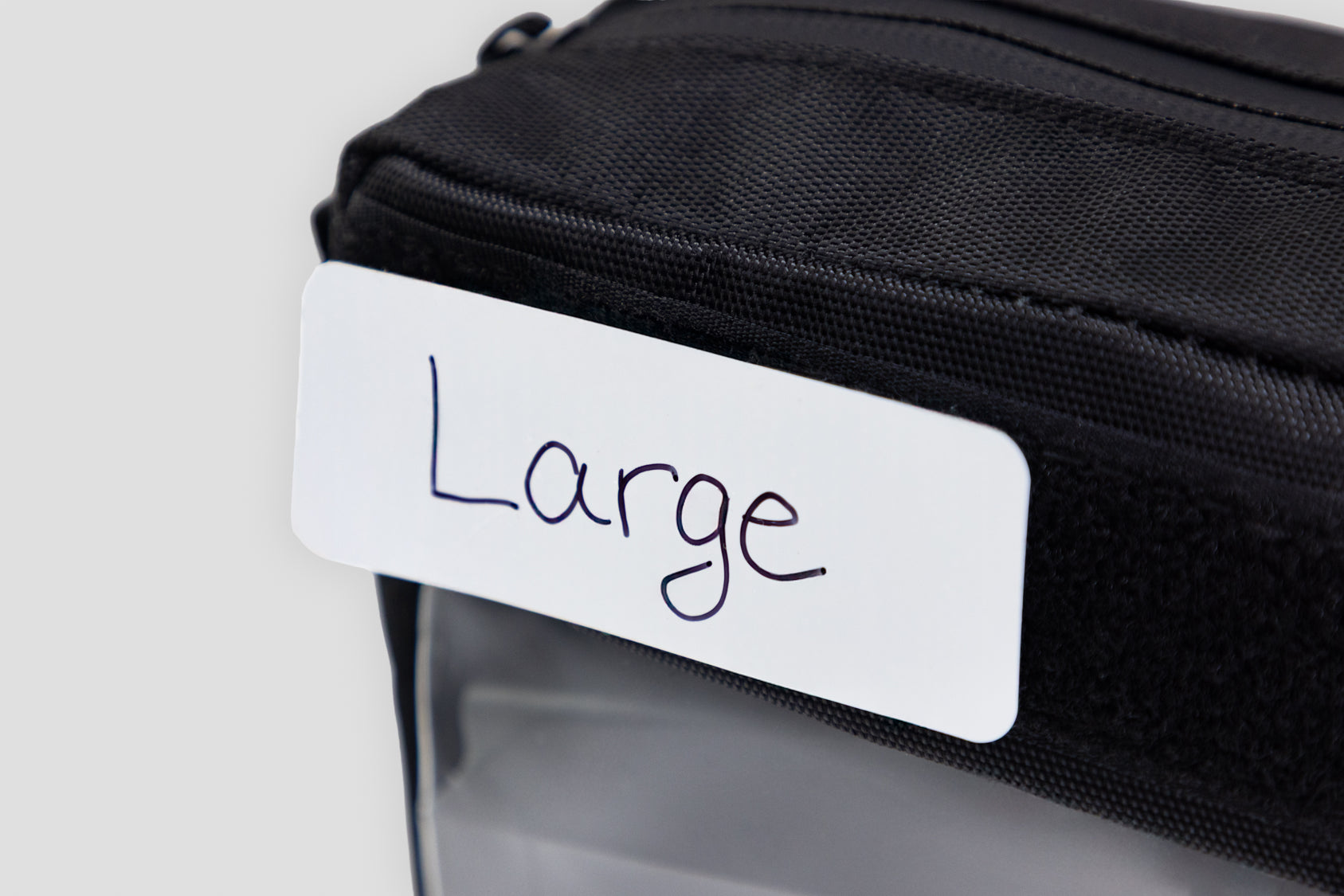
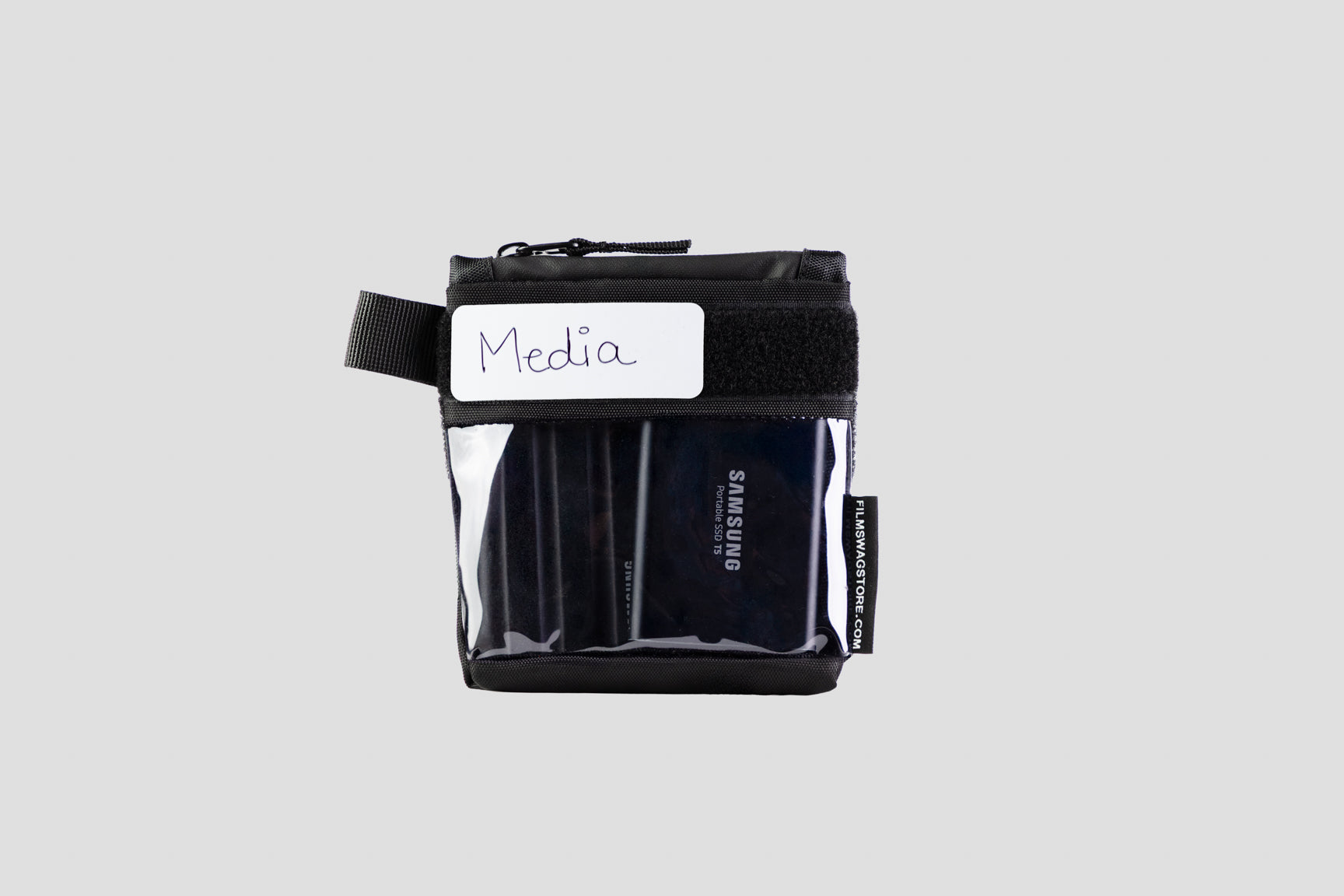
Customizable velcro labeling. Write exactly what's in each bag with dry-erase markers. Change labels as your kit evolves. "LENSES EF MOUNT" becomes "LENSES PL MOUNT" when you switch systems.
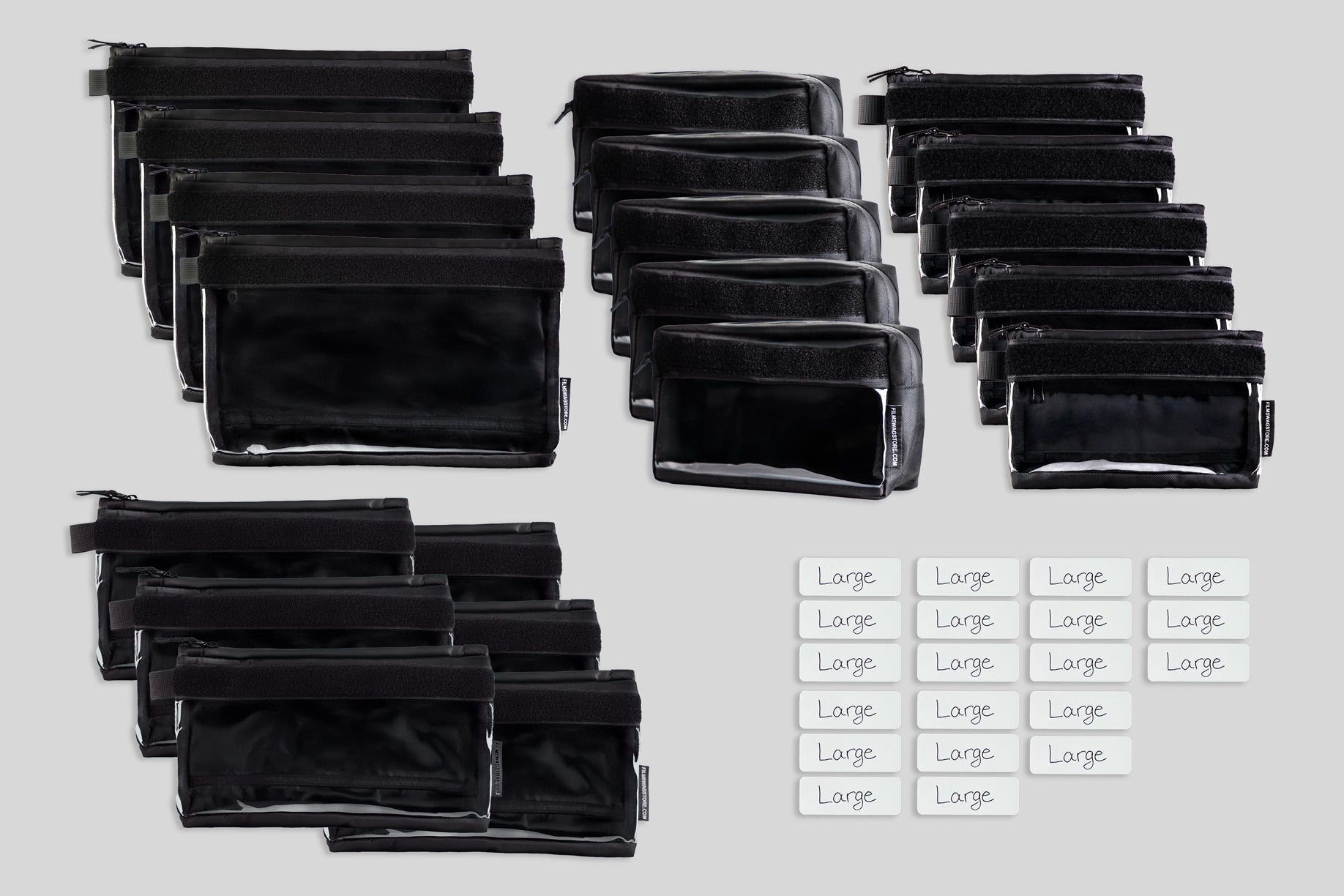
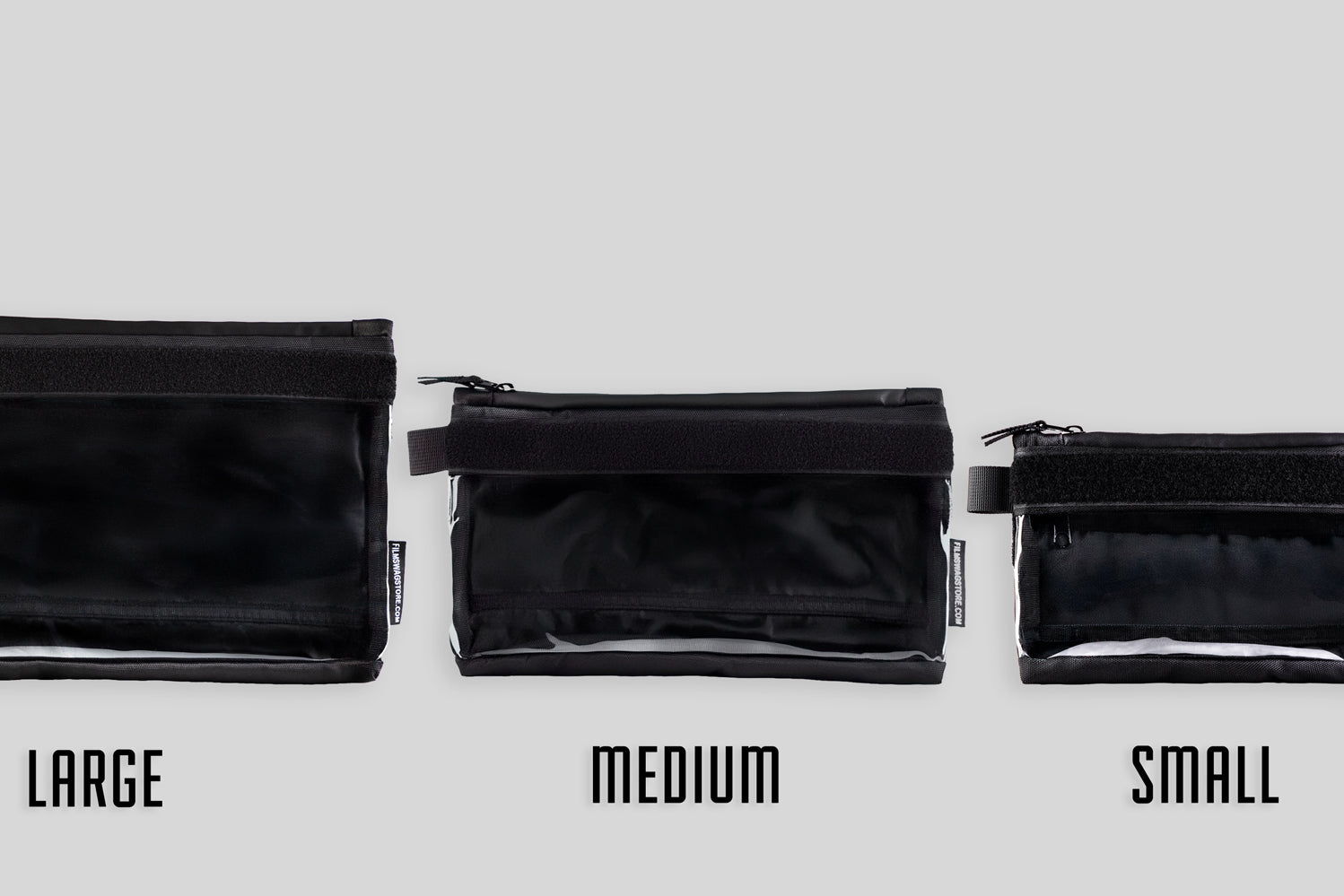
Multiple sizes for different gear. Small 5x5" bags for batteries and memory cards. Medium 7x9" bags for cables and accessories. Large 10x12" bags for lens kits or complete systems. Extra large 14x14" bags for bulk items.
Quick access organization. Bags sit in your cart, vehicle, or workspace with labels visible. Grab what you need in seconds without opening cases or moving other gear.
Lightweight and packable. Film Swag Bags weigh ounces, not pounds. They pack efficiently in vehicles, fit in overhead bins on flights, and don't add unnecessary weight.
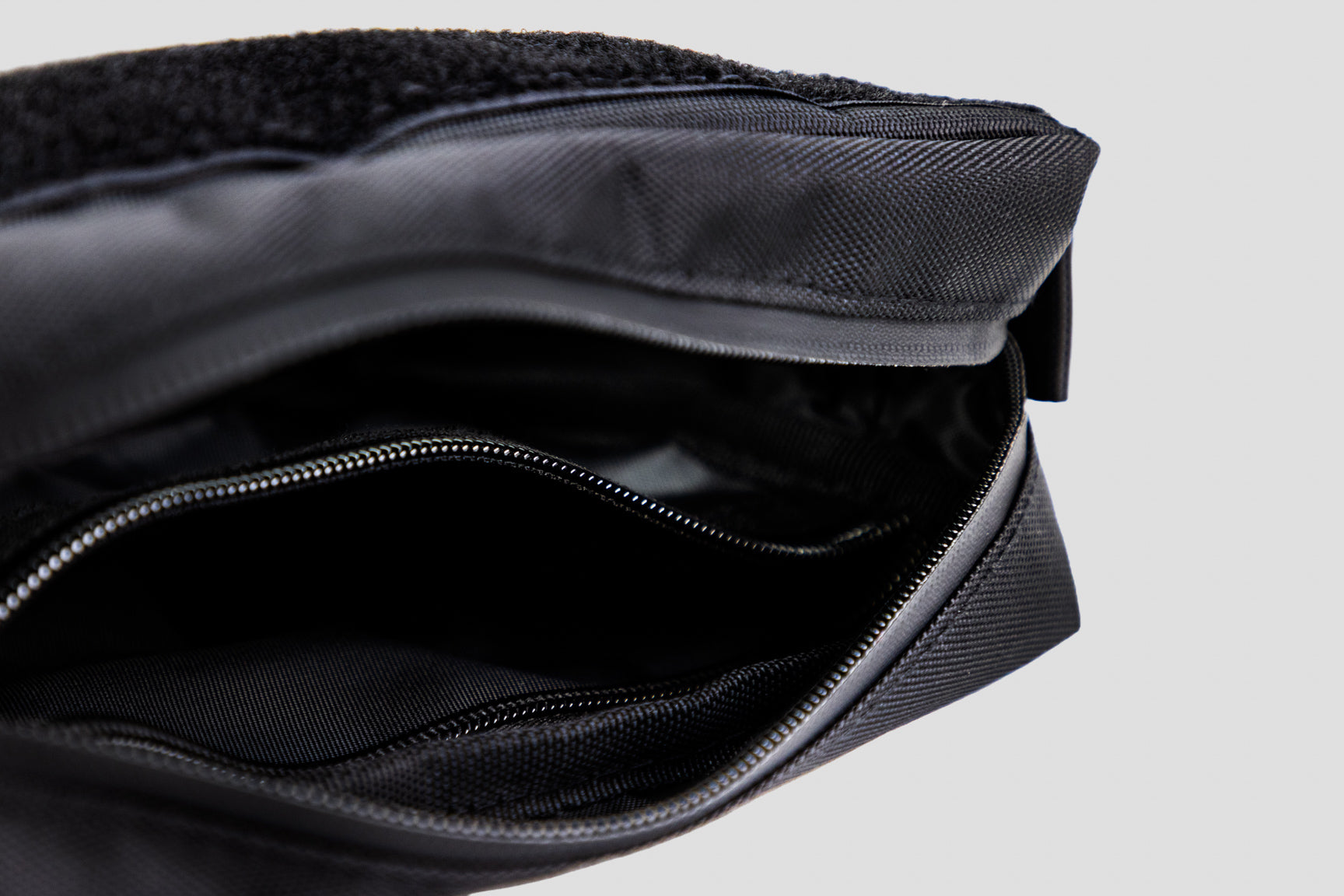
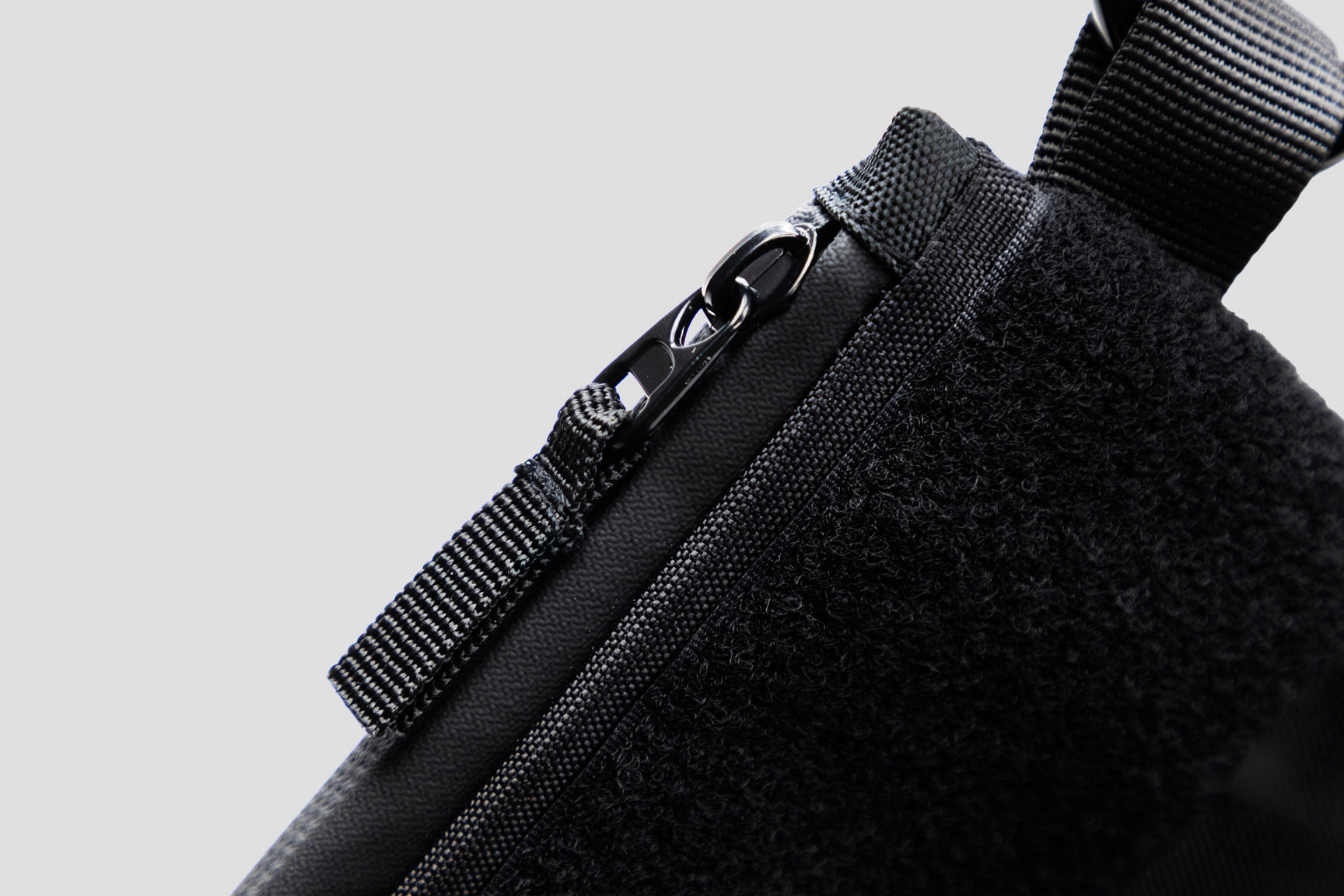
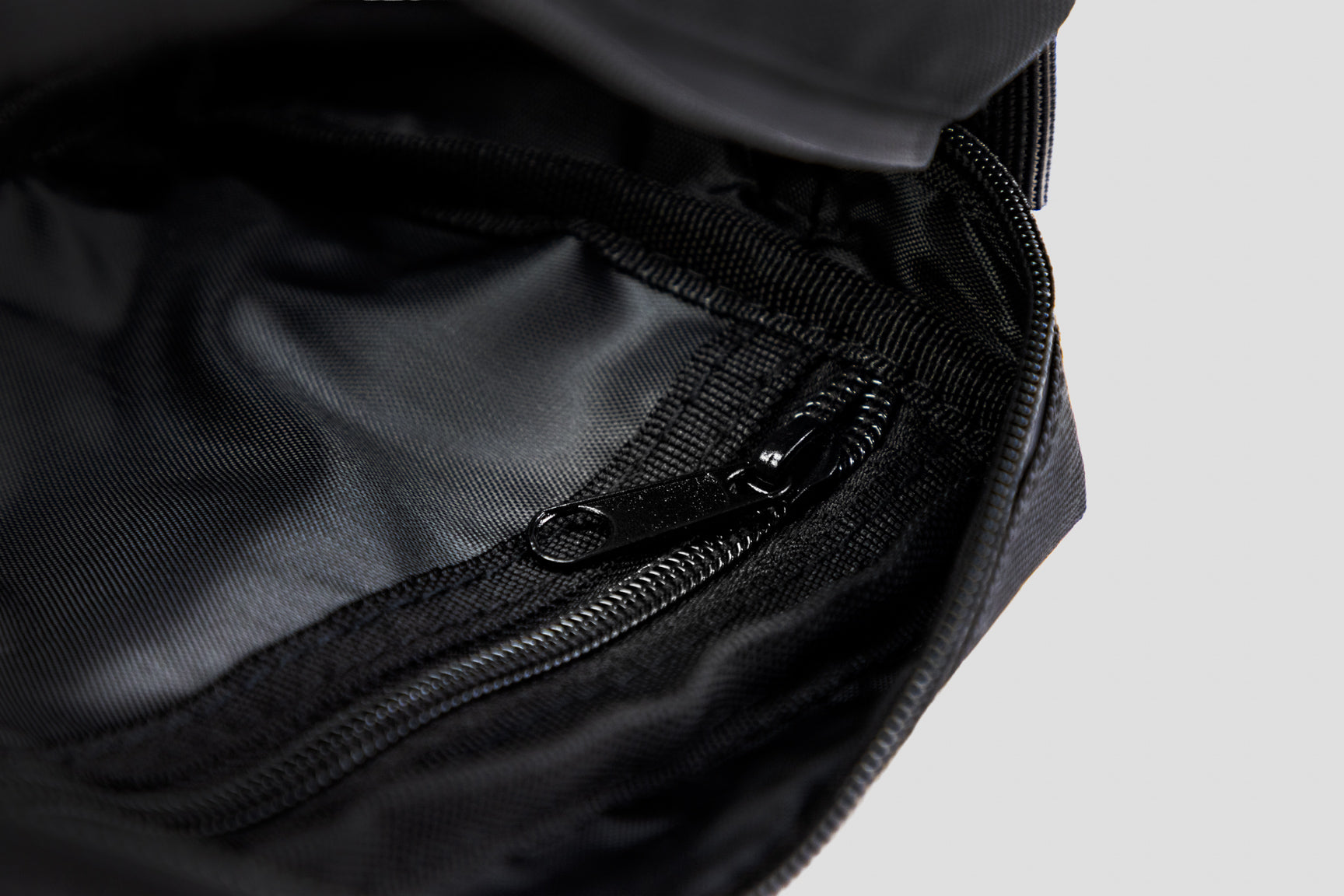
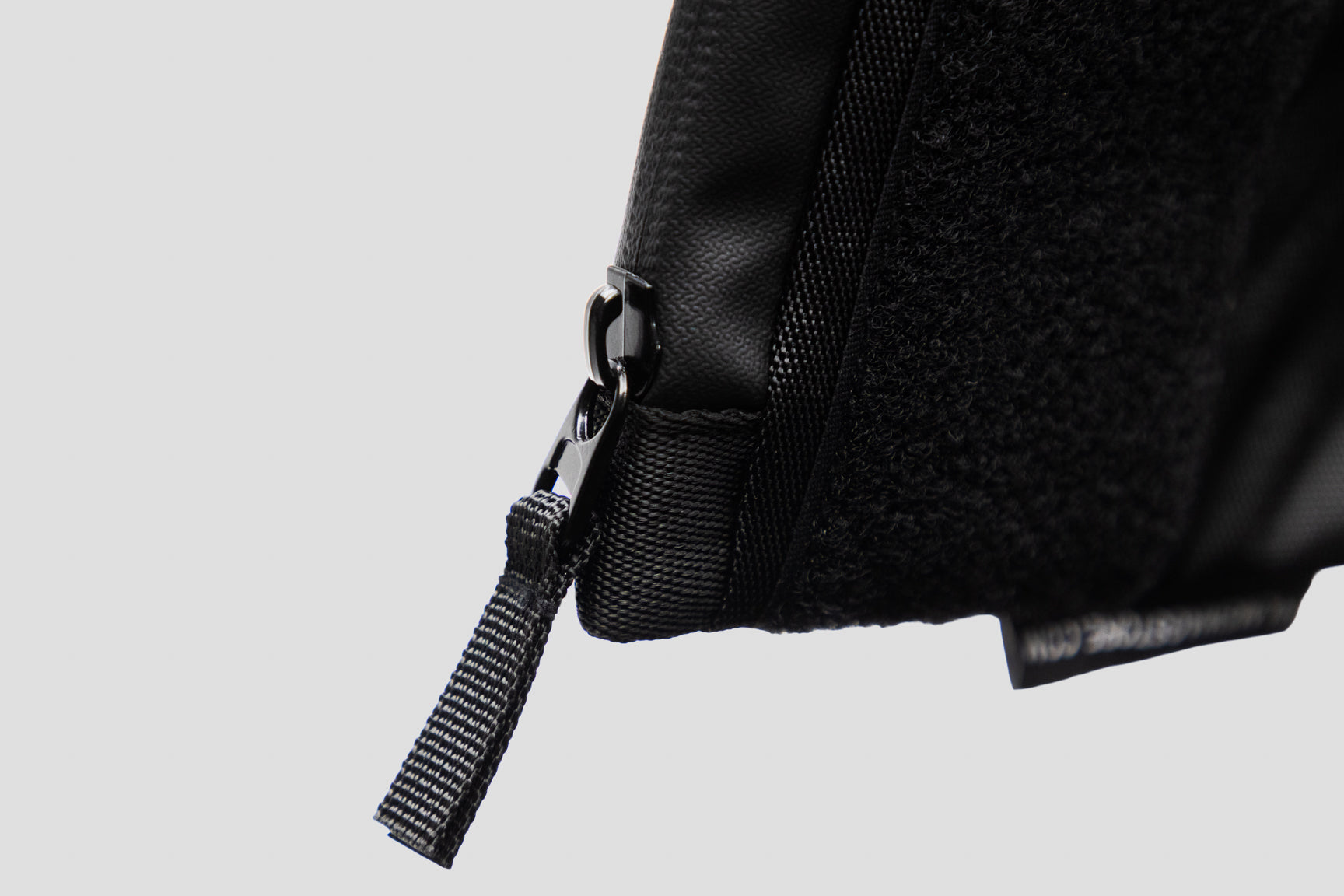
Set-tested durability. These aren't cheap pouches—they're built with ultra-high-quality zippers and materials designed for years of professional use.
How to Organize Your Owner-Operator Kit
Here's exactly how to organize a professional owner-operator kit using Film Swag Bags:
Step 1: Categorize by job type and frequency
Think about how you actually work:
Every-job essentials:
-
Batteries and chargers
-
Memory cards and card readers
-
Most-used cables
-
Lens cleaning supplies
-
Basic tools
Job-type specific:
-
Commercial kit accessories
-
Narrative kit accessories
-
Documentary kit accessories
-
Specialty items for specific clients
Backup and emergency:
-
Backup cables and adapters
-
Emergency repair items
-
Rarely used specialty gear
Step 2: Assign bags by category and frequency
High-frequency items (every job): Use small and medium bags that live in your primary work bag or cart:
-
Small bag: "BATTS + CARDS" (batteries and memory cards)
-
Small bag: "LENS KIT" (cleaning supplies, lens caps)
-
Medium bag: "CABLES PRIMARY" (HDMI, SDI, power cables you use constantly)
-
Medium bag: "TOOLS + TAPE" (multi-tool, Allen keys, gaffer tape)
Job-specific items: Use medium and large bags that you add to your kit based on the job:
-
Large bag: "LENSES COMMERCIAL" (lens accessories for commercial work)
-
Large bag: "LENSES NARRATIVE" (different lens accessories for narrative)
-
Medium bag: "WIRELESS VIDEO" (complete wireless video system)
-
Medium bag: "FOLLOW FOCUS" (complete follow focus system)
Backup and specialty: Use large and extra-large bags that stay in your vehicle or storage:
-
Large bag: "CABLES BACKUP" (backup cables and adapters)
-
Large bag: "SPECIALTY ADAPTERS" (unusual adapters and connectors)
-
Extra large bag: "EMERGENCY KIT" (repair items, backup supplies)
Step 3: Label everything clearly
Use the velcro label system to mark each bag with specific contents:
-
"BATTS SONY NPF (8)"
-
"CARDS 128GB (6)"
-
"CABLES HDMI 6FT + 15FT"
-
"LENSES EF MOUNT ACCESSORIES"
-
"WIRELESS TX + RX TERADEK"
Be specific enough that you or anyone helping you can find items immediately.
Step 4: Create job-type kits
Build standard configurations for your most common job types:
Commercial kit:
-
BATTS + CARDS bag
-
LENS KIT bag
-
CABLES PRIMARY bag
-
LENSES COMMERCIAL bag
-
WIRELESS VIDEO bag
Documentary kit:
-
BATTS + CARDS bag
-
LENS KIT bag
-
CABLES PRIMARY bag
-
LENSES DOCUMENTARY bag
-
AUDIO ACCESSORIES bag
Narrative kit:
-
BATTS + CARDS bag
-
LENS KIT bag
-
CABLES PRIMARY bag
-
LENSES NARRATIVE bag
-
FOLLOW FOCUS bag
-
WIRELESS VIDEO bag
You can grab the exact bags you need for each job type without packing your entire kit.
Step 5: Organize your vehicle efficiently
In your vehicle, organize bags by frequency:
Front seat or immediate access:
-
Every-job essentials (batteries, cards, primary cables)
Trunk or cargo area, easily accessible:
-
Job-specific bags you might need (lens kits, wireless systems)
Trunk or cargo area, deeper storage:
-
Backup and emergency bags
Step 6: Maintain flexibility
As your kit evolves:
-
Add new bags for new gear categories
-
Relabel existing bags with dry-erase markers
-
Reorganize bags between job types as needed
The system grows and adapts with your business.
Real Results from Working Owner-Operators
"I used to pack my entire kit in Pelican cases for every job, even simple interviews. Switching to Film Swag Bags means I can grab just what I need. I'm faster, more efficient, and clients notice." — David K., Owner-Operator DP, Los Angeles
"As a sound mixer who owns my kit, I need to adapt between narrative, documentary, and commercial work constantly. Film Swag Bags with clear labels let me reconfigure my kit in minutes instead of hours." — Amanda R., Production Sound Mixer, Atlanta
"I fly to jobs frequently. Film Swag Bags pack so much more efficiently than Pelican cases. I can fit more gear in carry-on luggage and avoid checked bag fees. They've paid for themselves in saved baggage fees alone." — Marcus T., Owner-Operator, New York
Your Owner-Operator Starter System
Ready to organize your kit for actual workflow instead of storage? Here's what I recommend:
Minimal Owner-Operator System ($150-250)
-
4x Small bags (5x5") for batteries, cards, and small essentials
-
4x Medium bags (7x9") for cables, tools, and accessories
-
2x Large bags (10x12") for job-specific gear
This covers a basic owner-operator kit for single-camera work.
Standard Owner-Operator System ($300-450)
-
6x Small bags (5x5") for batteries, cards, and small items
-
6x Medium bags (7x9") for cables, tools, and accessories
-
4x Large bags (10x12") for lens kits and complete systems
-
2x Extra large bags (14x14") for backup and bulk storage
This handles most owner-operator needs across multiple job types.
Complete Owner-Operator System ($500-700)
-
8x Small bags (5x5") for extensive small item organization
-
8x Medium bags (7x9") for comprehensive cable and accessory organization
-
6x Large bags (10x12") for multiple job-type configurations
-
4x Extra large bags (14x14") for backup systems and bulk storage
This is the complete professional system for owner-operators working across multiple formats and job types.
Film Swag Bags vs. Traditional Pelican Case Organization
Let's be direct about the comparison:
Film Swag Bags:
-
Modular—take only what you need for each job
-
Flexible—reorganize and relabel as your kit changes
-
Quick access—grab items in seconds without opening cases
-
Lightweight—ounces instead of pounds
-
Adaptable—works for any job type or kit configuration
-
Professional appearance with clear labeling
-
Affordable—build your system gradually
Pelican Cases with Foam:
-
All-or-nothing—bring the entire case or nothing
-
Rigid—locked into foam configuration
-
Slower access—open case, remove layers, extract items
-
Heavy—built for protection, not portability
-
Fixed—changing kit means re-cutting foam
-
Professional appearance (traditional)
-
Expensive—cases and foam add up quickly
For rental houses and shipping gear, Pelican cases are perfect. For working owner-operators, Film Swag Bags are more efficient.
The Bottom Line: Organize for How You Actually Work
You're not a rental house. You don't need to organize like one.
You're a working owner-operator who needs gear that's ready to deploy quickly, adapts to different job types, and moves efficiently between locations.
Film Swag Bags give you an organizational system designed for actual workflow, not storage. They're built by working owner-operators who understand exactly what you need because they need it themselves.
Stop organizing for storage. Start organizing for speed, flexibility, and efficiency.
Ready to organize your owner-operator kit? Visit FilmSwagStore.com to see the complete line of organizer bags designed for working professionals.
Free shipping on orders over $150. 30-day returns. Built by film pros, for film pros.
About the Author: This article was written by the team at Film Swag Store, founded by working film professionals with real on-set experience. We create organizational solutions because we've lived the problems they solve.