
The $12,000 Lens That Almost Rolled Into the Ocean
I'll never forget the day I watched a 1st AC nearly lose a Master Prime lens worth more than my car.
We were shooting on a cliff overlooking the Pacific. Beautiful location. Terrible working conditions. Wind gusting at 30mph, sand everywhere, and a camera package worth half a million dollars spread across weathered wooden apple boxes.
The 1st AC—let's call him Marcus—had been in the industry for 15 years. He knew his stuff. But on that day, his organization system failed him at the worst possible moment.
The director called for a lens change. Marcus reached into his bag, couldn't find the lens cap he needed, started digging deeper. In his frustration, he set the Master Prime down on an apple box. A gust of wind hit. The lens rolled.
I watched it happen in slow motion. That lens rolled toward the cliff edge. Marcus lunged. He caught it six inches from a 200-foot drop into the ocean.
Production shut down for 20 minutes while Marcus sat there, hands shaking, staring at that lens. The DP didn't say a word. He didn't have to. We all knew how close we'd come to disaster.
That night, Marcus told me he was redesigning his entire organization system. "I've been doing this wrong for 15 years," he said. "I thought I had a system. I didn't. I had chaos with a thin layer of control."
Why Assistant Camera Organization Is Different From Every Other Department
Here's what most people don't understand about AC work: you're managing the most expensive, most fragile, most critical equipment on set, often in the worst possible conditions, with zero margin for error.
Sound mixers can have messy bags. Grips can throw cables in a pile. But ACs? One disorganized moment can cost tens of thousands of dollars and shut down production.
The AC department faces unique organizational challenges:
Speed Requirements: When the director calls for a lens change, you have seconds, not minutes. Your system needs to be fast enough to keep pace with production without sacrificing safety.
Equipment Value: You're responsible for gear that costs more than most people's houses. A single lens can run $40,000. A full camera package? Easily $500,000+.
Environmental Chaos: You work in dust, rain, wind, extreme heat, freezing cold. Your organization system needs to function in conditions that would destroy most setups.
Precision Demands: ACs work with millimeter-level precision. You can't have "close enough" organization. Everything needs to be exactly where you expect it, every single time.
Constant Movement: Unlike sound mixers who set up and stay put, ACs are constantly moving with the camera. Your organization needs to be mobile without becoming unstable.
I've worked with ACs who could execute a lens change in under 30 seconds, even in terrible conditions. And I've worked with ACs who took five minutes and still couldn't find what they needed.
The difference? Three fundamental organization rules that separate professional ACs from everyone else.
Rule #1: Everything Has Exactly One Home (And You Never Violate It)
The best 1st AC I ever worked with was a woman named Sarah. She could find any piece of gear in her kit in under five seconds, even in complete darkness.
Her secret? Militant consistency about where things lived.
"Every lens cap has one home," she told me. "Every filter has one home. Every tool has one home. I never, ever put something in a temporary spot. Never. Because temporary becomes permanent, and permanent becomes chaos."
Sarah's system was simple but unbreakable:
Front pouches: High-frequency items she needed multiple times per setup (lens cleaning supplies, multi-tool, focus tape, sharpie).
Main compartment left side: Lens accessories organized by size (caps, rear caps, step rings, filters).
Main compartment right side: Camera accessories (batteries, media cards, Allen keys, lens support rods).
Back pocket: Documentation (lens charts, camera manuals, call sheets).
Here's what made Sarah's system work: she never broke her own rules. Not when she was tired. Not when she was rushed. Not when the director was screaming for a lens change.
"The moment you put something in the wrong spot because you're in a hurry," she said, "you've destroyed your system. Now you have two possible locations for that item. Then three. Then chaos."
Most ACs I know have experienced this breakdown. You're rushing between setups. You grab a lens cap, use it, shove it in the nearest pocket. Now that lens cap lives in two places. Next time you need it, you check the usual spot. It's not there. You waste 30 seconds searching. The DP is waiting. The director is waiting. The entire crew is waiting.
Thirty seconds doesn't sound like much. But multiply that by 10 times per day, times 12 shooting days, times 22 episodes. You've just wasted 110 hours of production time because you couldn't maintain your system.
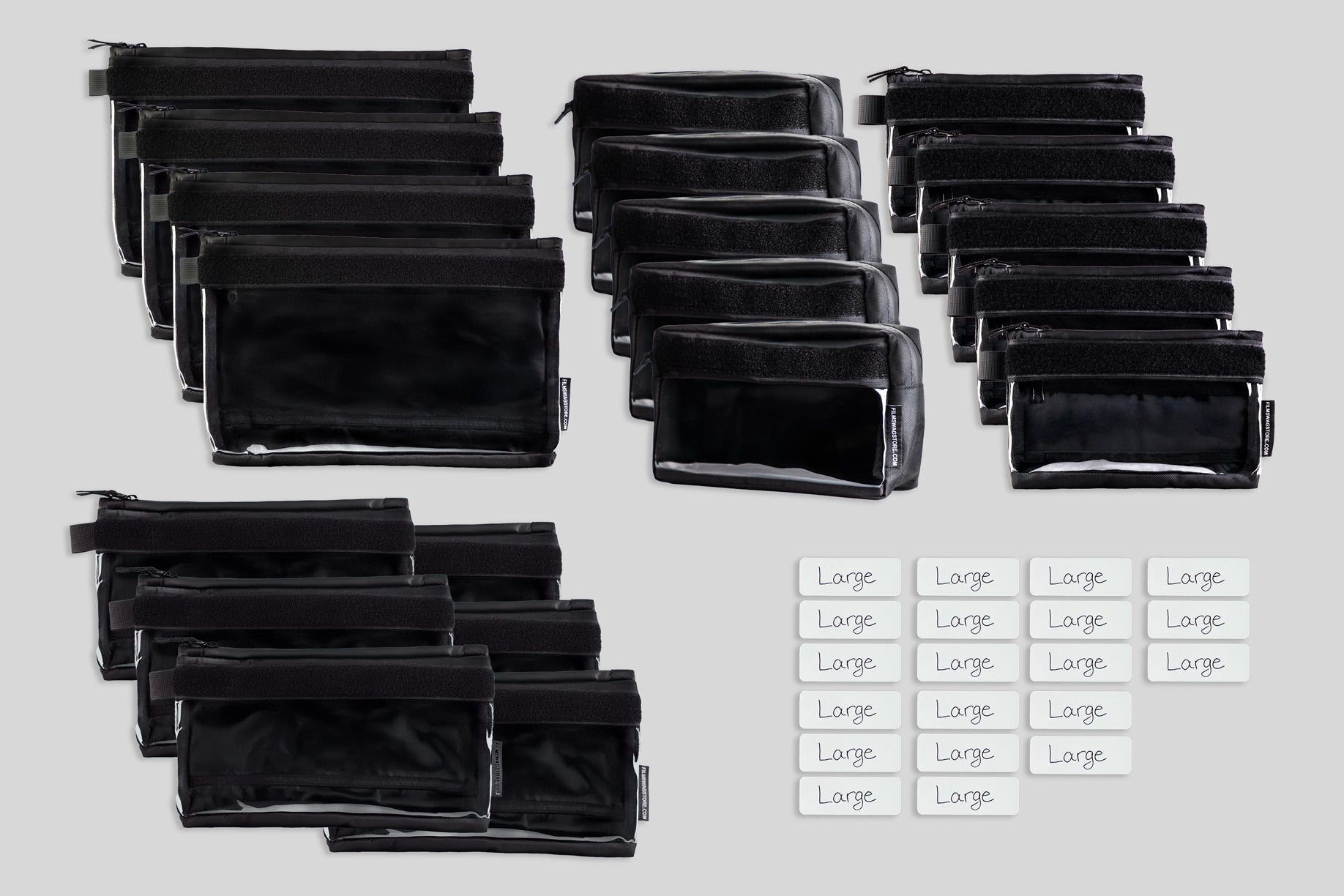
The Film Swag Solution: Our organizer bags are designed specifically for the "one home" rule. Each pouch is sized for specific gear categories. The velcro label system lets you mark exactly what lives where. Once you've established your system, the bags enforce it. There's no ambiguity about where things go.
Rule #2: Your System Must Work in the Dark, in the Rain, and When You're Exhausted
I learned this rule on a night exterior in Atlanta. We were shooting in a warehouse district, 2 AM, 95% humidity, everyone running on four hours of sleep.
The 1st AC was a guy named David. Solid operator. Great attitude. But his organization system depended on one critical factor: being able to see what he was doing.
At 2:30 AM, we lost our work lights. Generator issue. We had maybe 30 seconds of battery-powered emergency lighting before we'd have to shut down for the night.
The director wanted one more shot. Just one. But it required a lens change.
David opened his bag. In the dim light, everything looked the same. Black pouches. Black gear. No labels. No system that worked without visual confirmation.
He started pulling things out, trying to identify them by feel. Wrong lens. Wrong cap. Wrong filter. The emergency lights died. We shut down for the night.
The next day, David showed up with white velcro labels on every pouch. "I'm never doing that again," he said.
Here's the truth about AC work: you will work in terrible conditions. You will work when you're exhausted. You will work in environments where your normal senses don't function properly.
Your organization system needs to work anyway.
The best AC systems have these characteristics:
Tactile differentiation: You can identify items by touch, not just sight. Different pouch sizes, different textures, different locations.
High-contrast labeling: White labels on black bags. Large, clear text. Readable from three feet away in low light.
Muscle memory compatibility: Your system is consistent enough that your hands know where to go without conscious thought.
Weather resistance: Your organizational tools don't fail when they get wet, dusty, or dirty.
I watched an AC named James work through a rain scene once. Pouring rain. Camera getting soaked. Everyone miserable. James executed three lens changes without missing a beat. His bags were designed for exactly this scenario. Waterproof. Labeled. Organized so precisely that he could work by feel alone.
"I test my system in the worst conditions I can imagine," James told me. "If it works in the rain at 3 AM when I'm exhausted, it'll work anywhere."
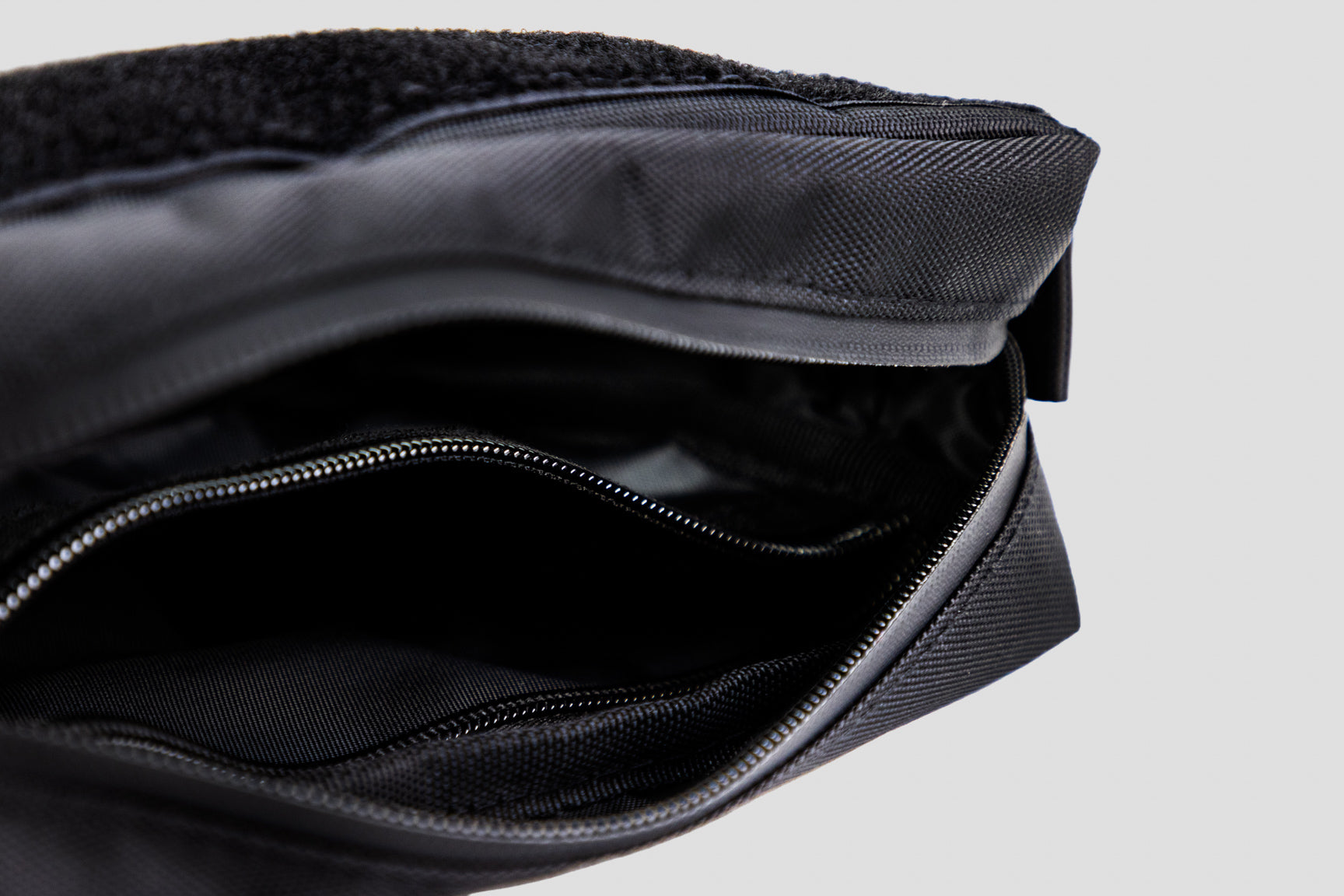
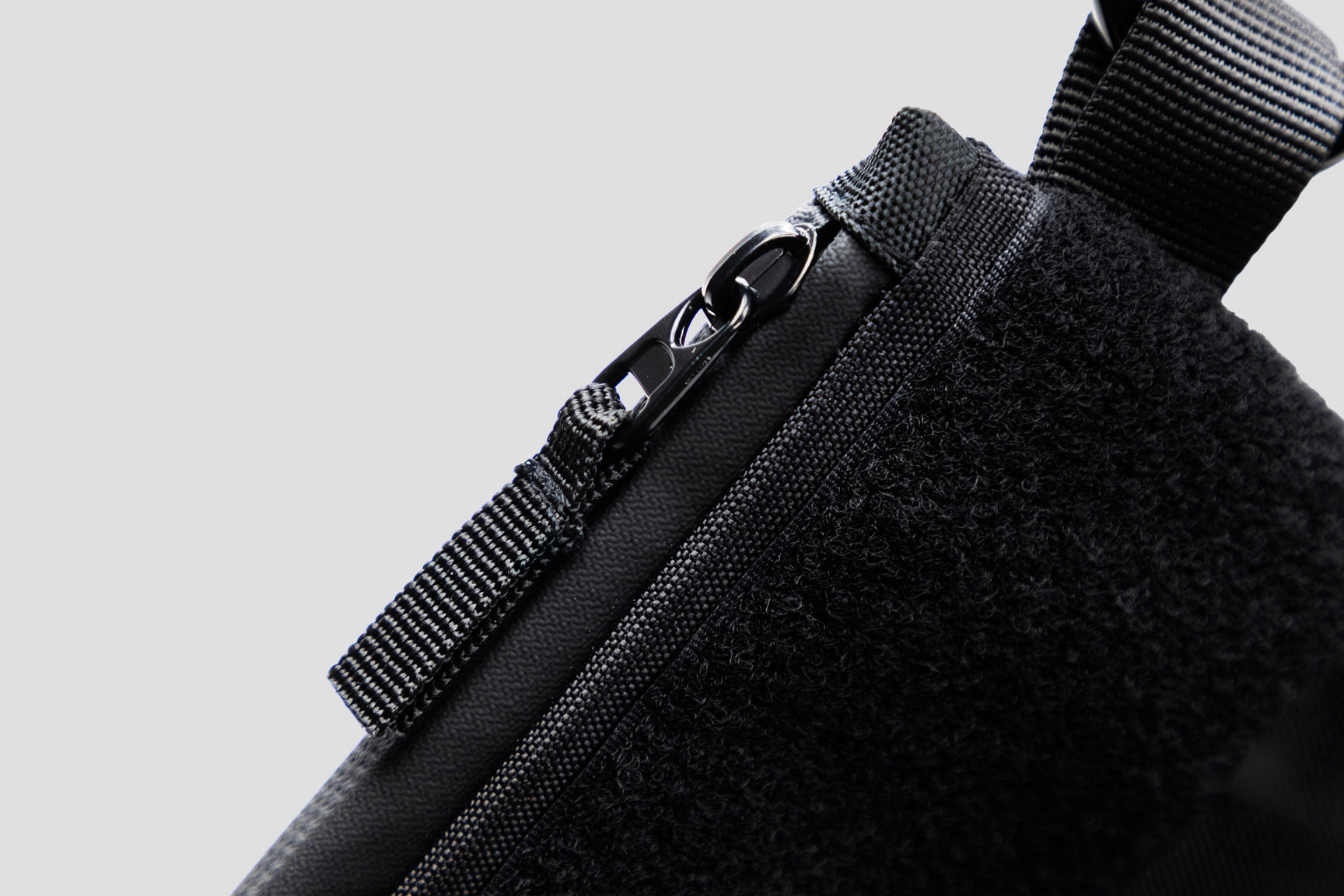
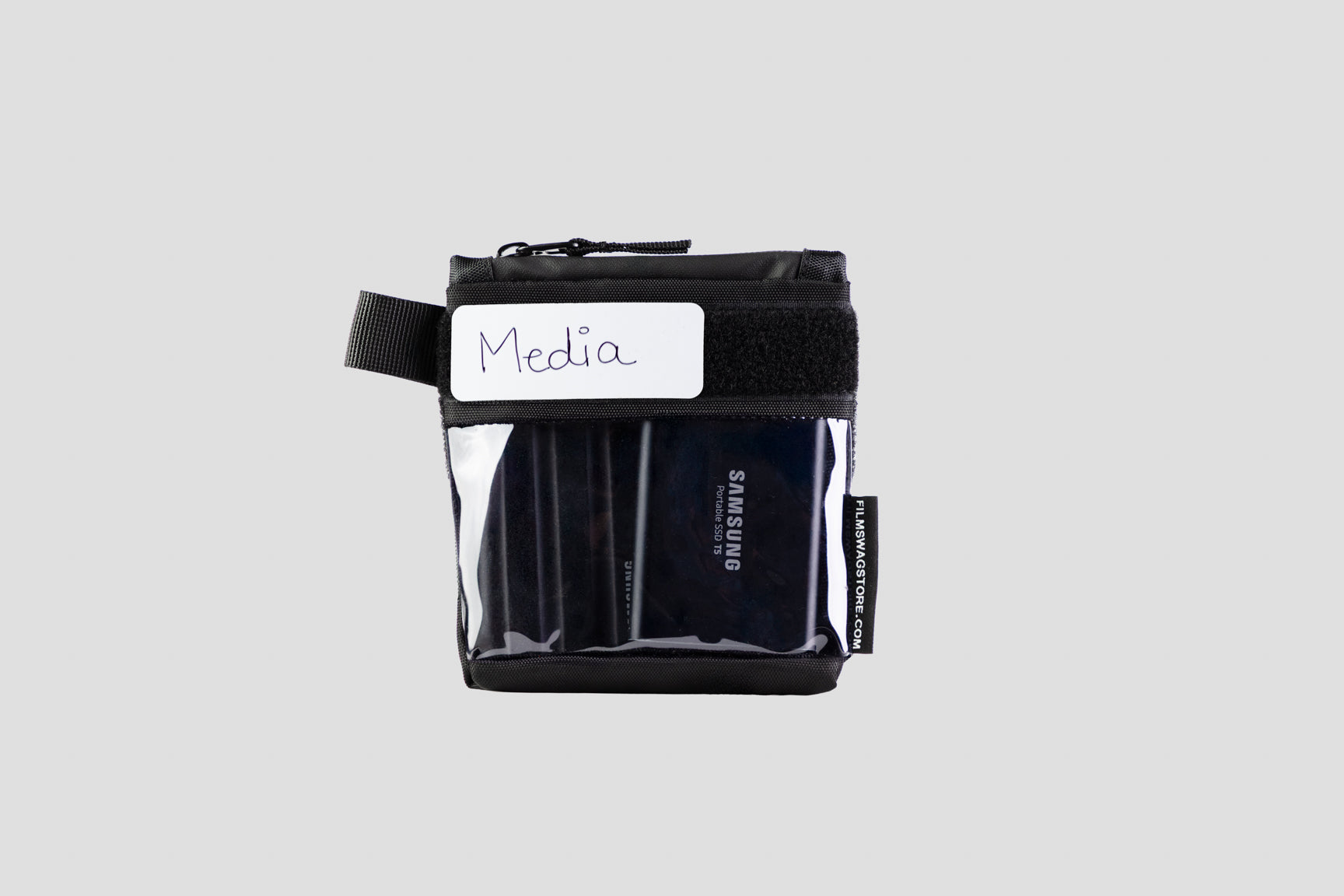
The Film Swag Solution: Our bags are built for harsh conditions. Premium materials. Ultra-high quality zippers that don't fail when they get wet or dirty. White board velcro labels that stay readable even in low light. The system is designed to work when everything else is falling apart.
Rule #3: Your Organization System Must Scale With Your Career
Here's what nobody tells you when you're starting out as an AC: your organizational needs will change dramatically as your career progresses.
When you're a 2nd AC on small productions, you might have five lenses and basic accessories. Your organization system can be simple.
When you're a 1st AC on a major feature, you might be managing 20+ lenses, multiple camera bodies, wireless systems, follow focus units, filters, and accessories worth half a million dollars. Your organization system needs to scale.
I've watched too many ACs hit a ceiling in their careers because their organization system couldn't grow with them. They developed habits on small shows that didn't translate to big shows. When they got the call for a major production, they couldn't handle the complexity.
The best ACs I know built scalable systems from day one.
What scalable organization looks like:
Modular design: You can add capacity without redesigning your entire system. More bags that integrate with your existing setup.
Consistent methodology: The rules you use for organizing five lenses still work for organizing 25 lenses.
Department-specific customization: Your system adapts to different types of productions (commercial vs. narrative, studio vs. location, film vs. digital).
Future-proof flexibility: When new technology arrives, your system can incorporate it without starting from scratch.
I worked with a 1st AC named Rachel who started on micro-budget indies and worked her way up to Marvel movies. Her organization system scaled with her.
"When I was starting out, I had one Film Swag organizer bag," she told me. "Now I have eight. But the system is the same. Each bag has a specific purpose. Each pouch is labeled. Each item has one home. I just have more homes now."
Rachel's system worked on $50,000 indie films and $200 million blockbusters because she built it to scale from the beginning.
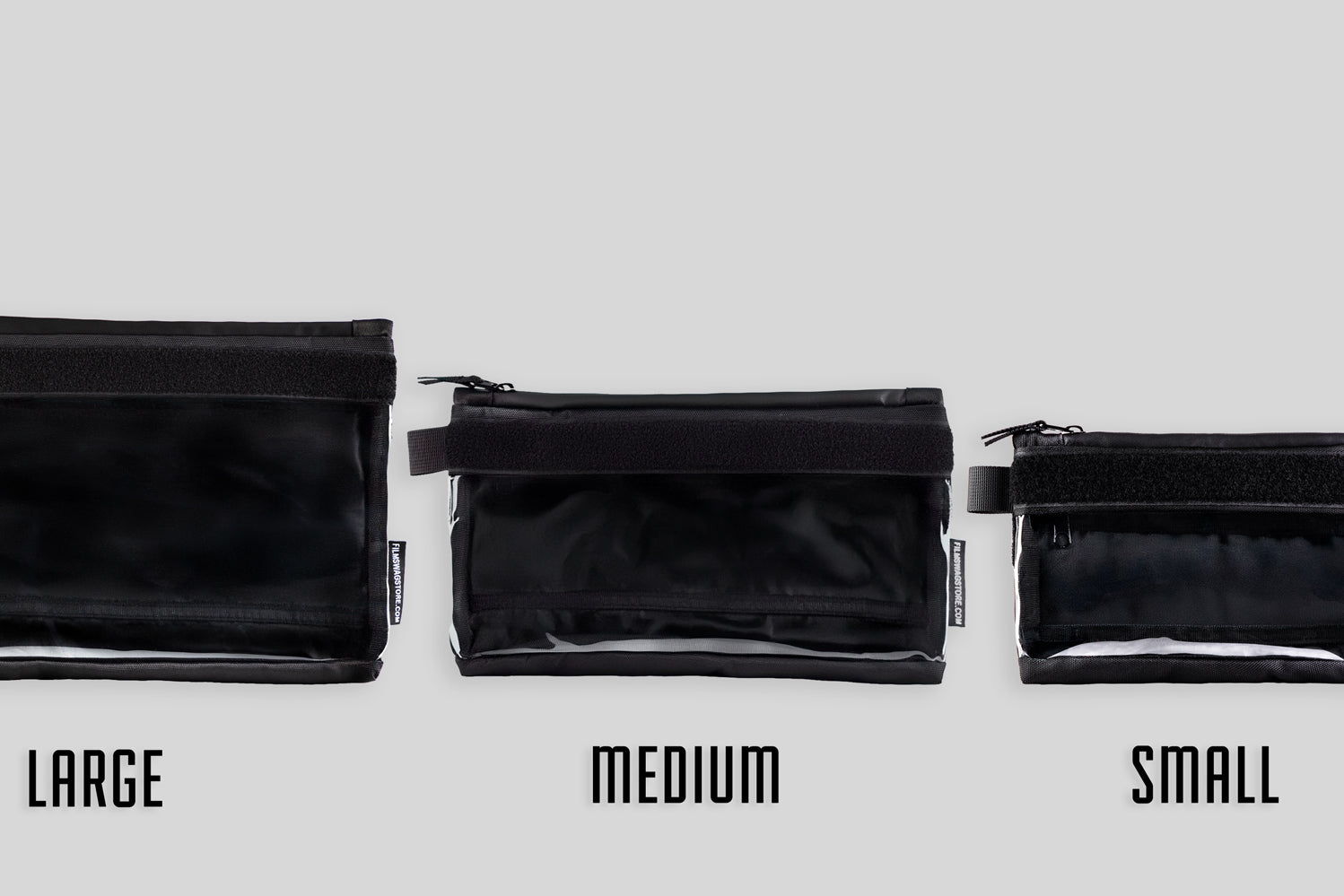
The Film Swag Solution: Our bags are designed to grow with your career. Start with one 8x8" bag for basic accessories. Add a second bag for lens accessories. Add a third for camera accessories. Each bag integrates with the others. The labeling system stays consistent. Your methodology doesn't change—your capacity does.
The Real Cost of Disorganization (And Why Most ACs Underestimate It)
Let's talk numbers.
A typical AC on a union show makes $600-800 per day. A typical shooting day is 12 hours. That's $50-67 per hour.
If disorganization costs you five minutes per day searching for gear, that's $4-6 of wasted time. Doesn't sound like much.
But multiply that across a career:
-
5 minutes per day × 200 shooting days per year = 1,000 minutes = 16.7 hours
-
16.7 hours × $60/hour = $1,000 per year in wasted time
-
Over a 30-year career: $30,000 in lost productivity
And that's just your time. What about the cost to production?
When you can't find gear quickly, you're not just wasting your time. You're wasting the time of 50-100 crew members who are standing around waiting. At an average crew burn rate of $10,000-20,000 per hour, every minute of delay costs production $167-333.
Five minutes of searching for a lens cap? That's $835-1,665 in wasted production costs.
Do that twice per day, and you're costing production $1,670-3,330 per day. Over a 12-day shoot, that's $20,040-39,960.
But here's the real cost: reputation damage.
ACs live and die by their reputation. You get hired because DPs trust you. You get recommended because producers know you're reliable. You move up in your career because people know you won't slow down production.
One slow lens change doesn't end your career. But a pattern of disorganization? That gets you labeled as "not ready for bigger shows."
I've seen talented ACs get stuck at a certain level because they couldn't get their organization together. They had the technical skills. They had the experience. But they couldn't move fast enough, couldn't stay organized enough, couldn't scale their system enough.
The ACs who build great careers? They treat organization as a core technical skill, not an afterthought.
How to Build Your AC Organization System (The Right Way)
If you're ready to build a professional organization system, here's how to do it:
Step 1: Audit Your Current System
Pull out everything you carry on set. Every lens cap, every filter, every tool, every accessory. Lay it all out.
Ask yourself: How long does it take me to find each item? Where does each item currently live? Do I ever search for things? Do I ever put things in temporary spots?
Be honest. Most ACs discover they don't actually have a system—they have habits that sometimes work.
Step 2: Define Categories
Group your gear into logical categories:
-
High-frequency items (used multiple times per setup)
-
Lens accessories (caps, filters, step rings)
-
Camera accessories (batteries, media, tools)
-
Documentation (charts, manuals, paperwork)
Step 3: Assign Permanent Homes
Using the "one home" rule, assign each category to a specific location. Use bags with multiple pouches so you can physically separate categories.
Label everything. Use white labels on black bags for maximum contrast.
Step 4: Test in Harsh Conditions
Before you trust your system on a real shoot, test it:
-
Can you find items in low light?
-
Can you find items by touch alone?
-
Does your system work when you're tired?
-
Does your system work in rain or dust?
If the answer to any of these is "no," redesign until it's "yes."
Step 5: Enforce Your Rules Religiously
This is where most ACs fail. They build a great system, then gradually stop following it.
Make a commitment: you will never put something in the wrong spot. Not when you're tired. Not when you're rushed. Not ever.
Your system only works if you follow it 100% of the time.
Why Film Swag Bags Are Built for AC Work
I designed these bags after 15 years of watching ACs struggle with organization systems that weren't built for the realities of set life.
Here's what makes them different:
Customizable Velcro Labels: Mark exactly what lives where. White board tags let you reorganize as your needs change. No more guessing where things are.
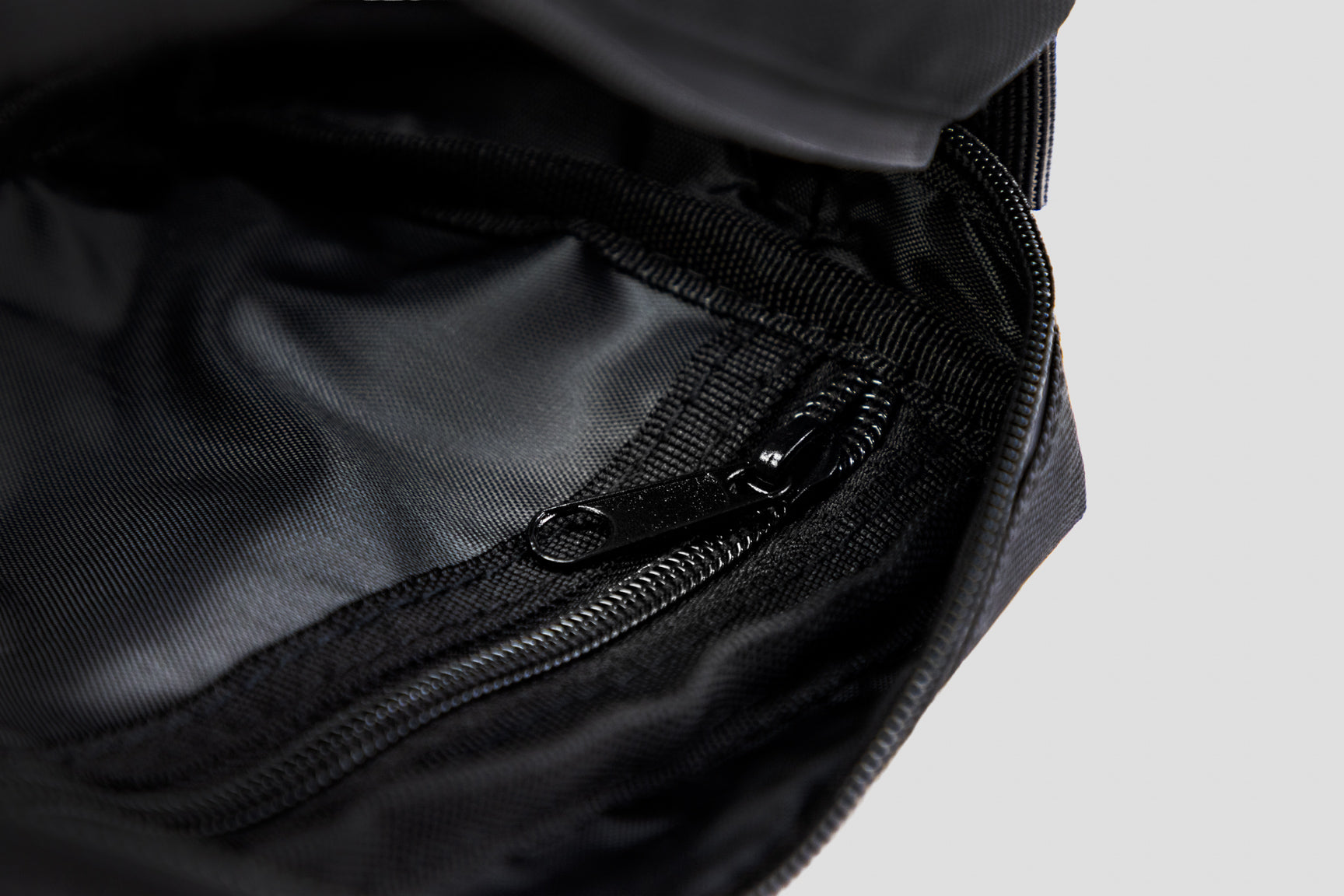
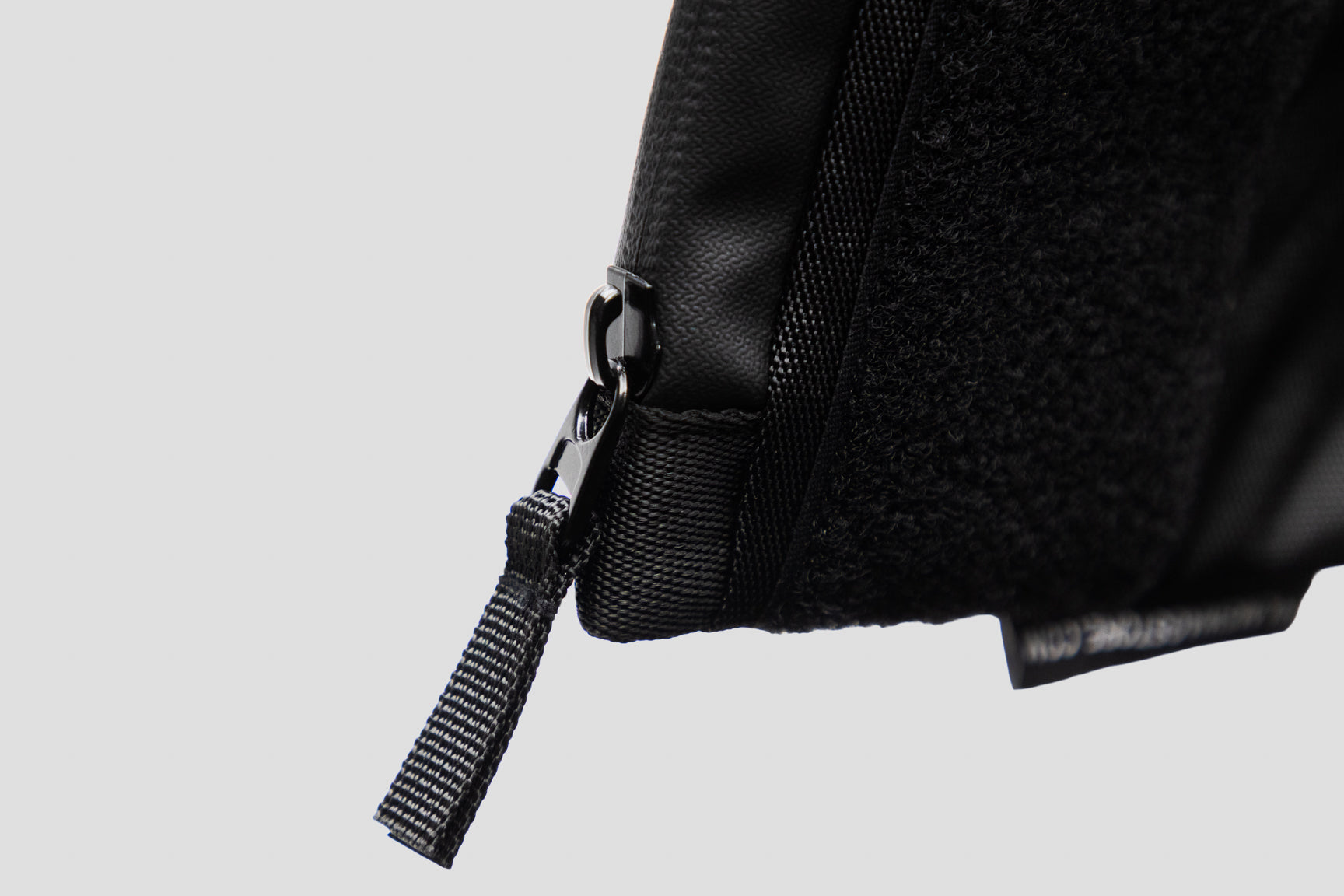
Premium Durability: Ultra-high quality zippers and materials that survive harsh conditions. These bags don't fail when they get wet, dirty, or beaten up.
Modular Sizing: Start with one bag. Add more as your career grows. The system scales from indie films to major features.
Department-Specific Design: Built by people who've actually worked as ACs. Every pouch, every pocket, every design choice is based on real on-set needs.
Rapid ID System™: Find any piece of gear in under 5 seconds. That's not marketing—that's the actual design goal.
Your Next Step
If you're ready to build a professional AC organization system, here's what I recommend:
For 2nd ACs and beginners: Start with our 8x8" organizer bag. Use it for high-frequency items and basic accessories. Build the habit of "one home" for everything. As you add gear, add bags.
For experienced 1st ACs: Get our AC Starter System (two 8x8" bags and one 10x10" bag). Dedicate one bag to lens accessories, one to camera accessories, and one to high-frequency items. Label everything. Test your system in harsh conditions before you trust it on set.
For ACs managing large packages: Build a complete system with multiple bags for different categories. Use our velcro label system to mark exactly what lives where. Create a system that works by muscle memory.
The investment in proper organization isn't an expense—it's career insurance. The ACs who build great systems are the ones who get hired for bigger shows, who get recommended by DPs, who build 30-year careers.
Marcus—the AC who almost lost that Master Prime—completely rebuilt his organization system after that day on the cliff. He bought three Film Swag bags, labeled everything, and committed to never breaking his own rules.
Two years later, he's now the A-camera 1st AC on a major network show. His organization system is so solid that the DP specifically requests him for every project.
"That day on the cliff changed my career," he told me. "Not because I almost lost a lens. Because I finally understood that organization isn't optional. It's the foundation of everything else."
Ready to build your system?
Visit FilmSwagStore.com and check out our AC-specific organizer solutions. Every bag comes with our 30-day return policy and free shipping on orders over $150.
Your future self—and your DP—will thank you.